The first layer of the Keiskamma Altarpiece

Keiskamma Altarpiece

A monumental, multi-panel artwork was created by 130 women from South Africa’s Eastern Cape province — an area of the world hard hit by AIDS — to commemorate the lives and memory of individuals there who have died of the disease and to celebrate the community’s determination to…

A monumental, multi-panel artwork was created by 130 women from South Africa’s Eastern Cape province — an area of the world hard hit by AIDS — to commemorate the lives and memory of individuals there who have died of the disease and to celebrate the community’s determination to prevail in the face of AIDS.
The Keiskamma Altarpiece was born in Hamburg, South Africa, a small fishing town hit hard by HIV/AIDS. Named after the Keiskamma River Valley, it grew into a stunning example of how the arts can foster international solidarity, commanding audiences in North America and Europe.

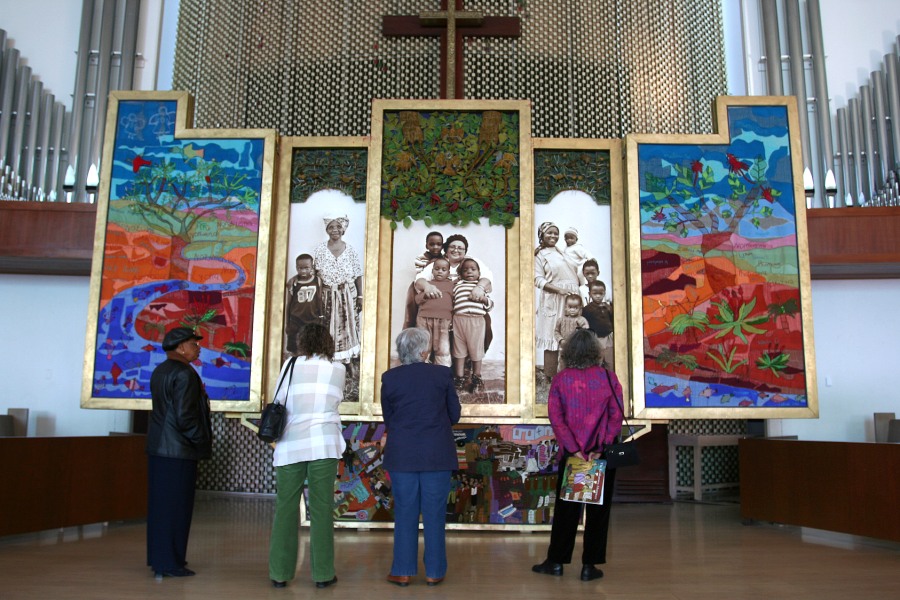
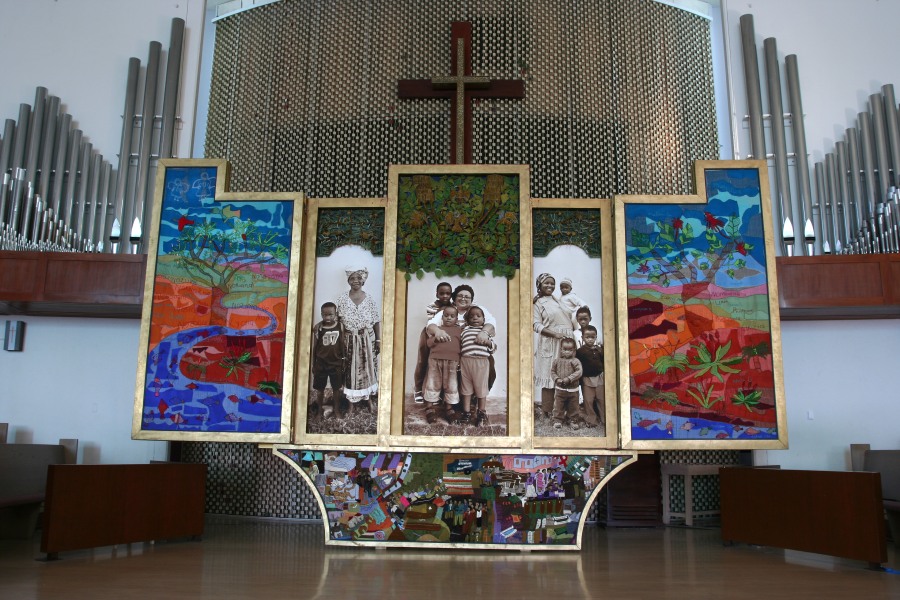
The Keiskamma Altarpiece was inspired by Matthias Grünewald’s Isenheim Altarpiece, created during the German Renaissance to pictorialize deliverance from a plague. Made to fit the same dimensions, 13 feet tall and 22 feet wide, the Keiskamma Altarpiece tells the story of the resolve of the women of Hamburg to prevail in the midst of HIV/AIDS.

Dr. Carol Hofmeyr, the only doctor working with HIV patients in the area, gave the women of Hamburg needles and thread to sew pillows in order to supplement their income. When the women demonstrated uncanny skill and artistry, Hofmeyr gave the group more ambitious projects to complete, including the towering altarpiece.

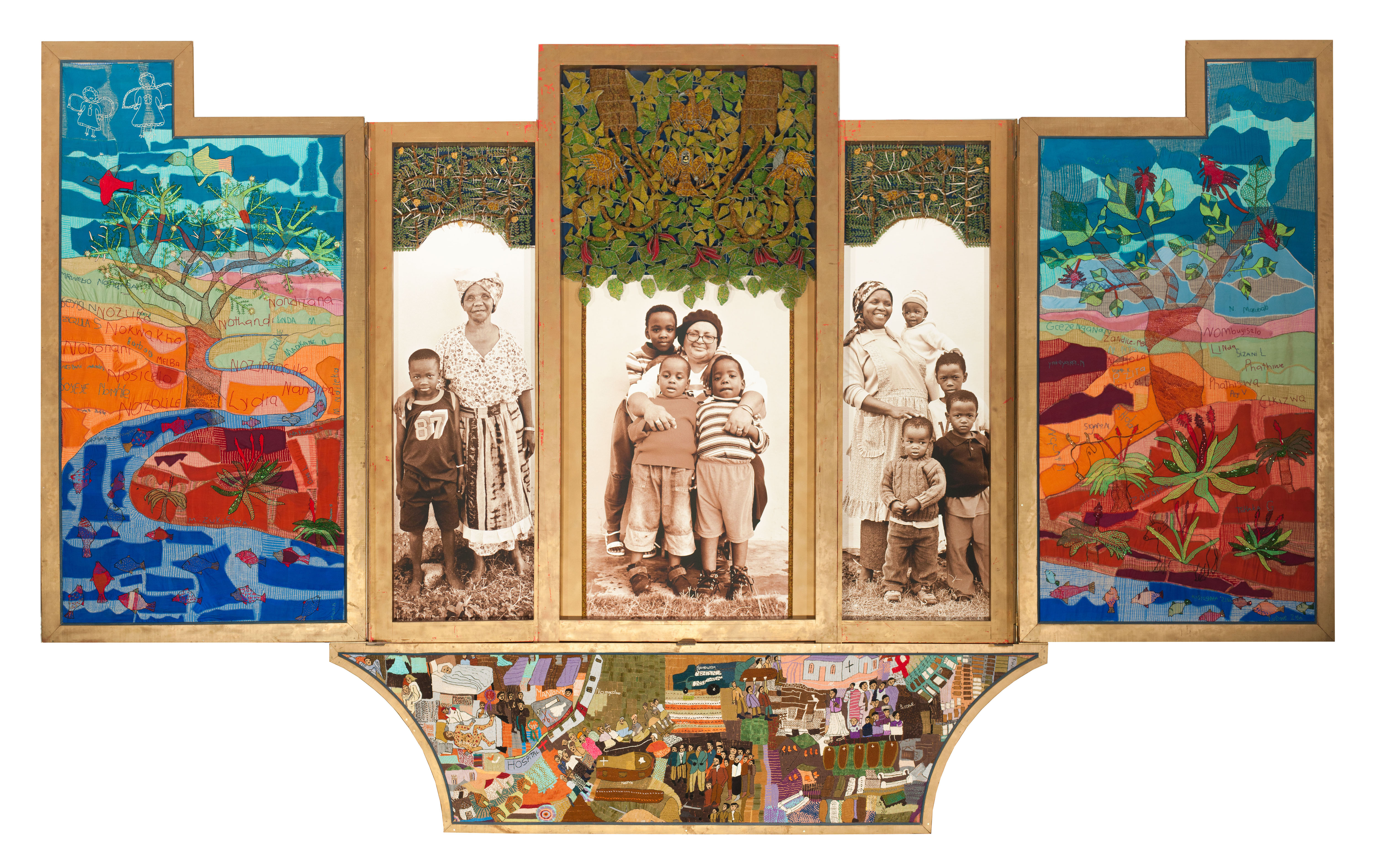
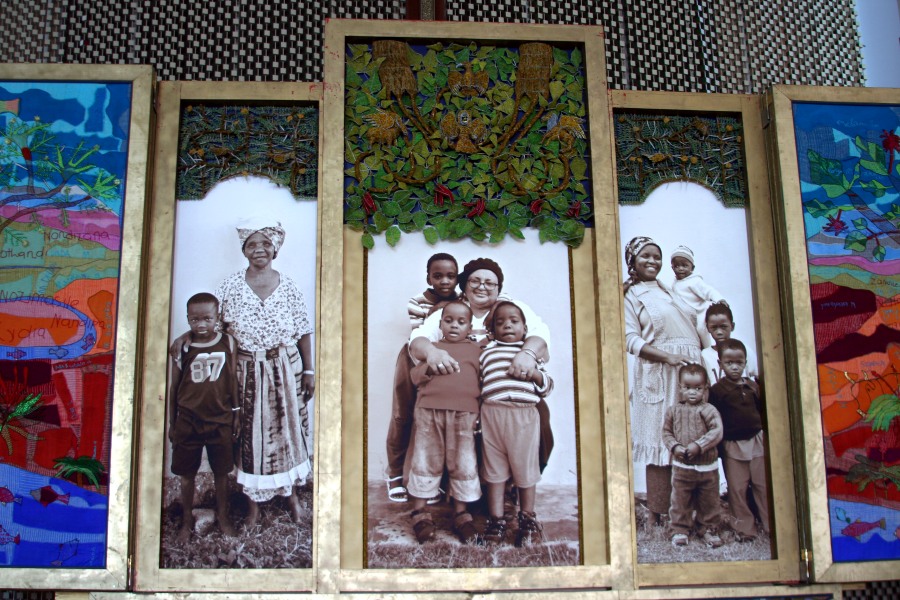
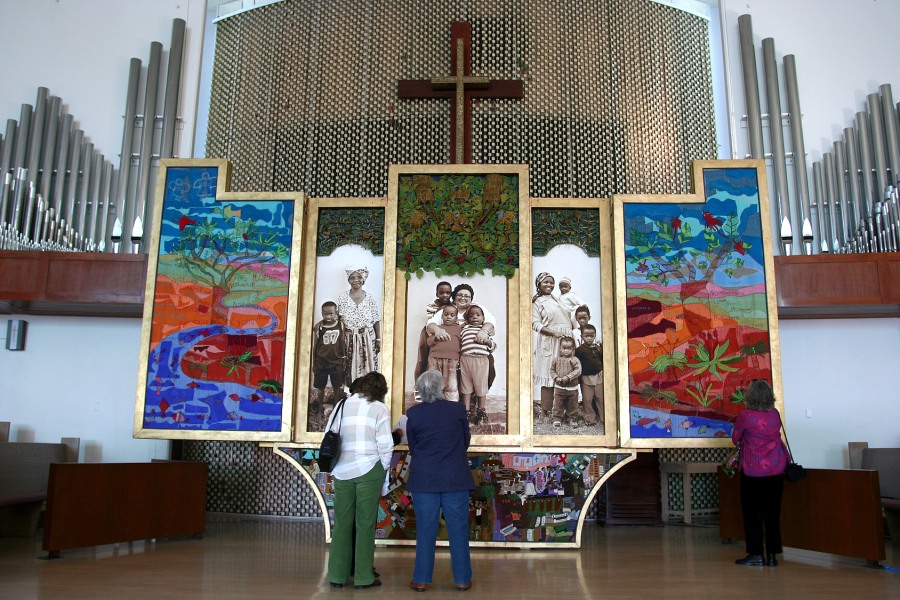
Worked on by more than 130 women (and a few men), the complex art piece has several opening doors. When the doors are fully opened, they display three giant printed portraits of local grandmothers with their grandchildren (many of them orphaned). The grandmothers are not victims, but instead are pictured as nurturing cornerstones in the fight against HIV/AIDS. 

The town’s lone community health educator, Eunice Mangwane, played a key role in the project, providing information and support as the community produced the series of major art works. She is pictured in the center of the altarpiece with her grandchildren. Her daughter is HIV-positive.

MAKE ART/STOP AIDS brought the altarpiece to the World AIDS Conference in 2006, and then to Chicago and UCLA, where it received its campus debut on World AIDS Day in 2006. Subsequently, it was shown at three Los Angeles churches—Holmes United Methodist, Hollywood United Methodist, and S.M.U. Methodist—before continuing to tour throughout the U.S. and U.K. Sites included Grace Cathedral in San Francisco, St. James Cathedral in Seattle, Washington National Cathedral in D.C., and Southwark Cathedral in London. Sponsorship by St. James Cathedral in Chicago helped make this possible.

Details

Images46 images
Date2006
VenueUCLA Kaufman Hall, Los Angeles, United States
CuratorCarol Brown, David Gere, Carol Hofmeyr
Organized byKeiskamma Art Collective, MAKE ART/STOP AIDS
PartnersUCLA Art & Global Health Center
Rating
Search
Item Title The first layer of the Keiskamma Altarpiece
General Date 2006-01-01
Precise Date
Resource Type Exhibitions/Installations
Creator Keiskamma Art Collective
Contributor
Photographer
Description

Medium: Collaborative embroidery and mixed media on masonite.

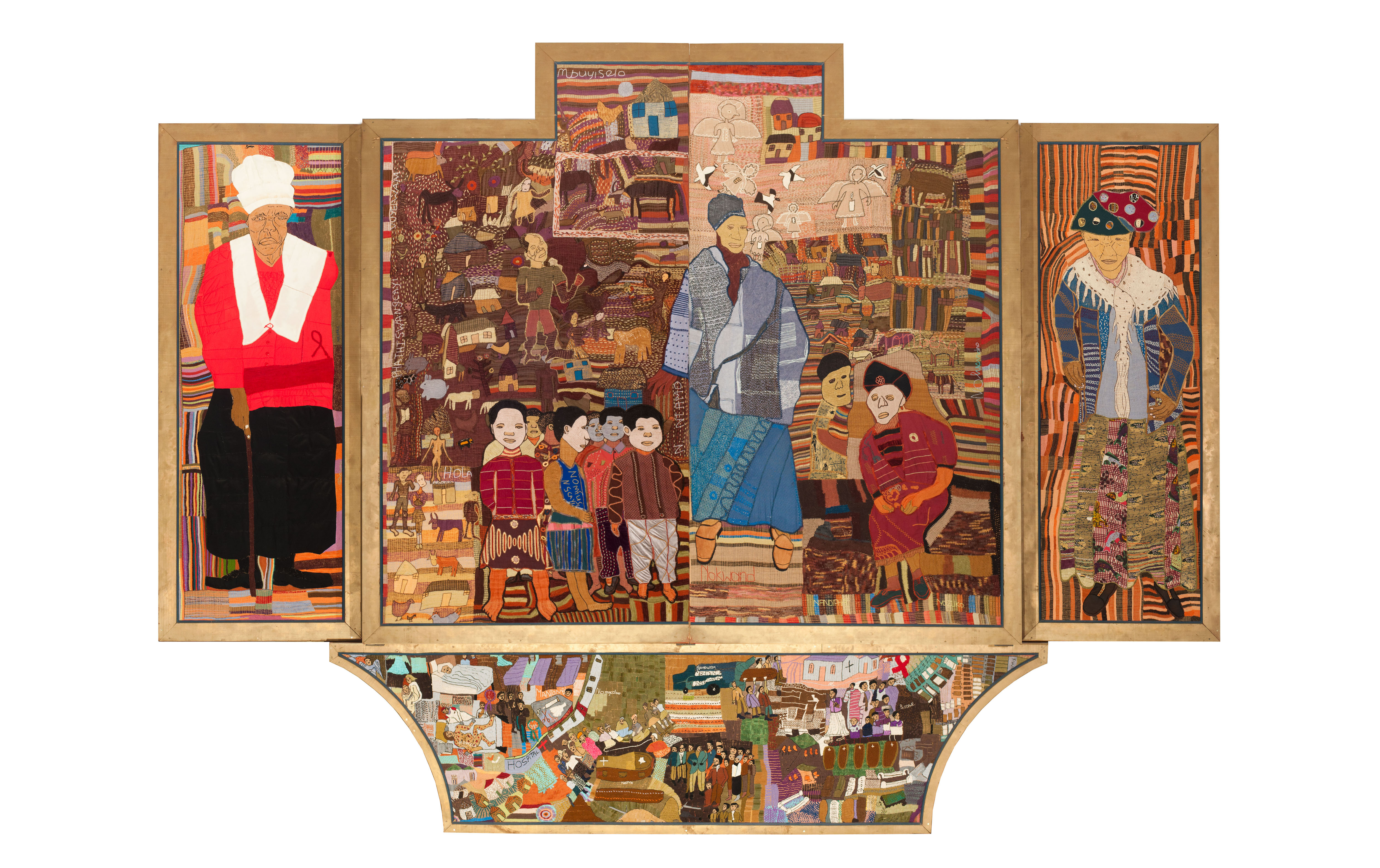
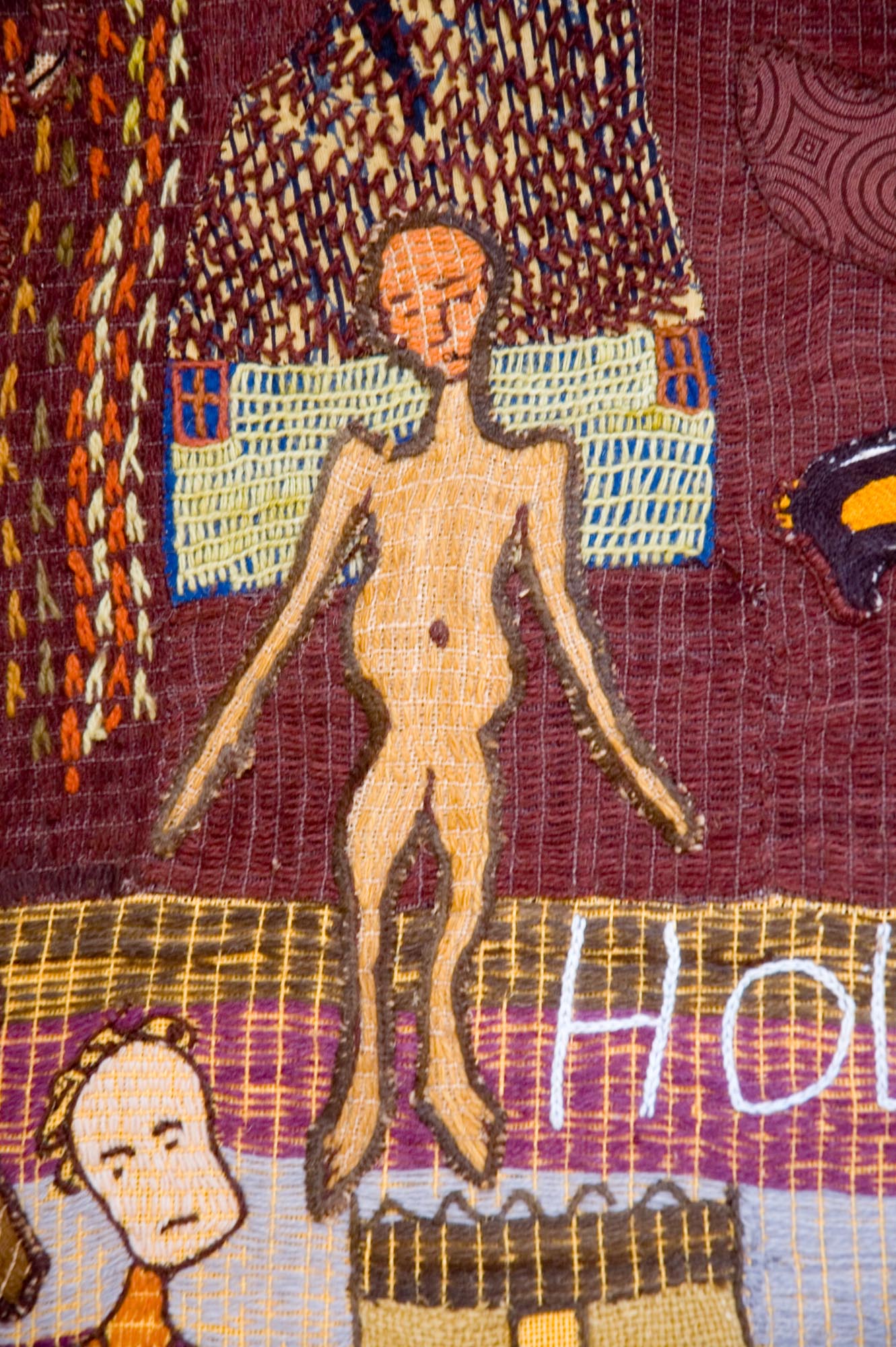
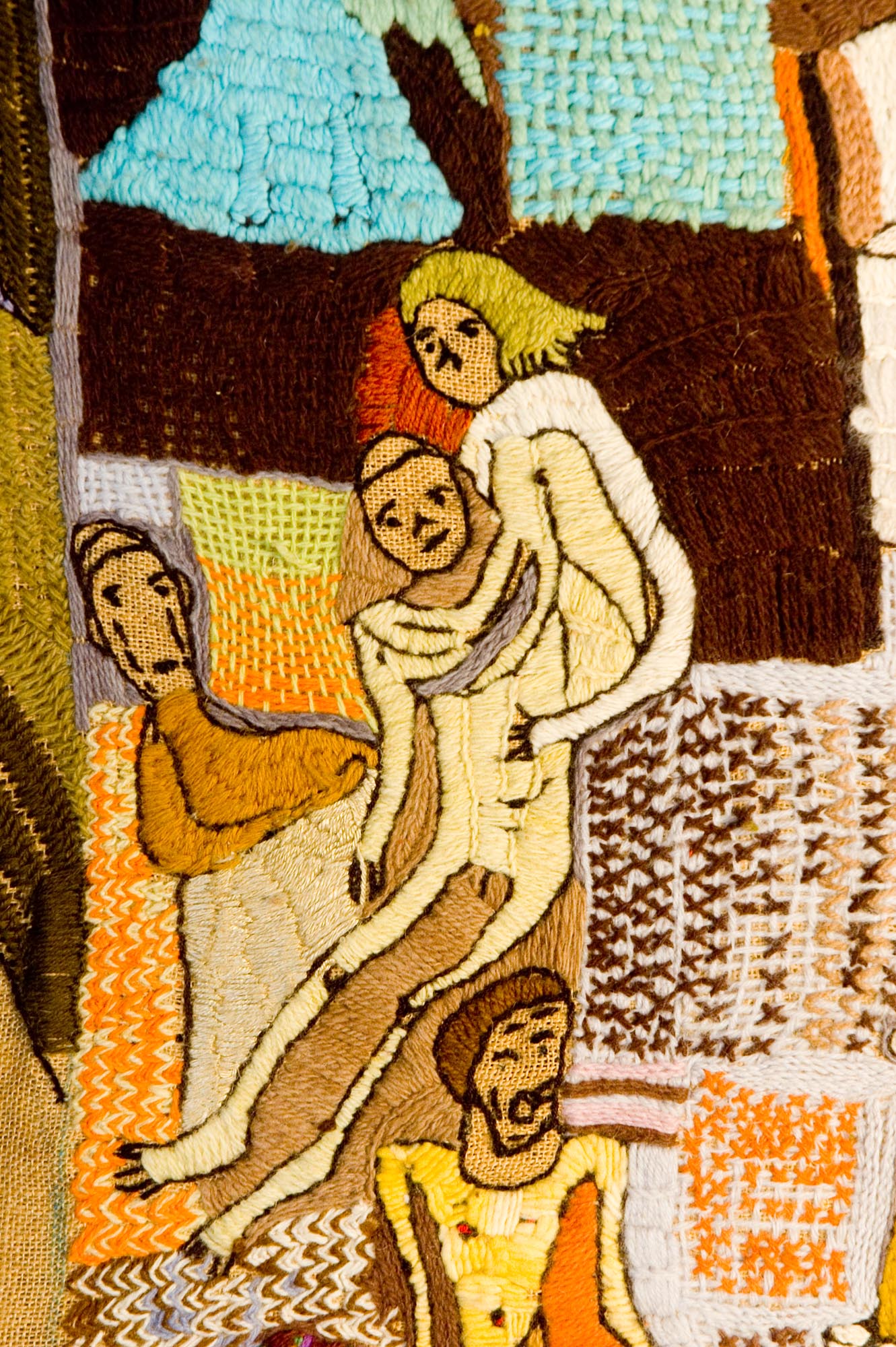
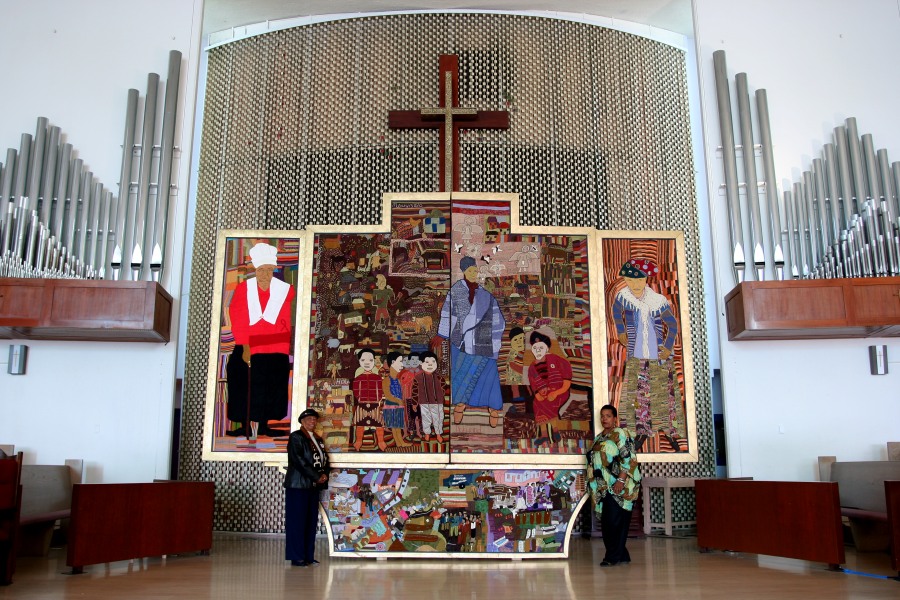
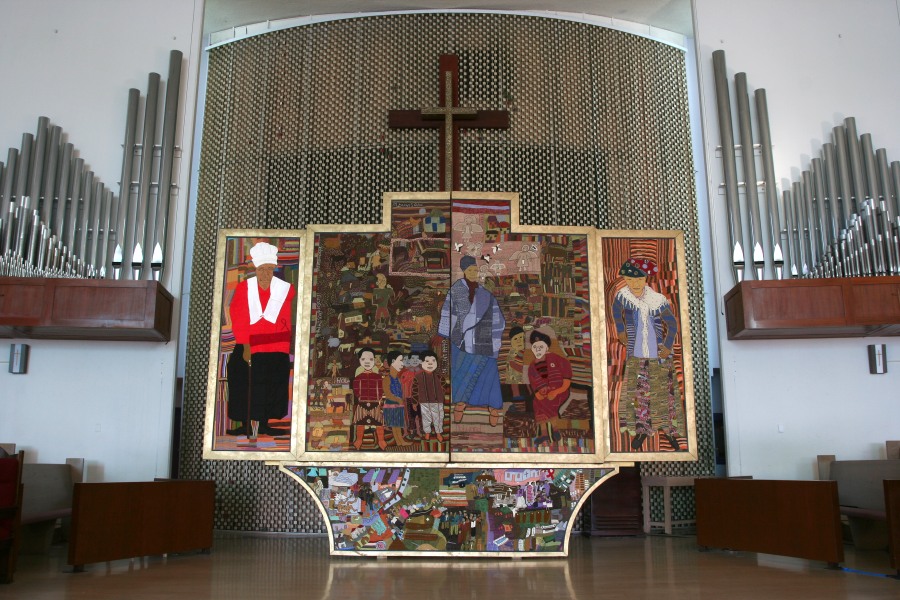
The first layer of the Keiskamma Altarpiece shows the crucifixion reworked through the experience of the Hamburg, South Africa, community. According to Dr. Carol Hofmeyr, this structure was inspired by the Isenheim Altarpiece (Colmar, France), which presents a crucifixion flanked by saints associated with disease. In the Keiskamma Altarpiece, these saints are replaced by women from the community whose lives were shaped by the beginning of the HIV/AIDS crisis.

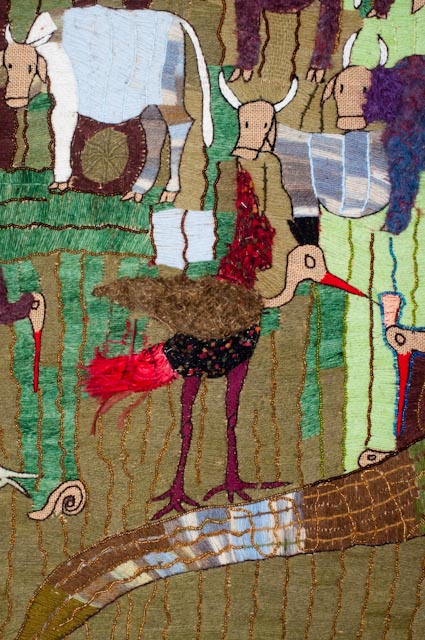
At the center is a young widow standing in front of the cross, dressed in mourning clothes. Hofmeyr notes that widows were common at the time, as men who had worked in cities returned home ill and died, followed by others in the village. Groups of children appear nearby, representing families left behind. On one side sits a grandmother inside a house, based on a photograph, representing women who assumed responsibility for raising their children’s children.

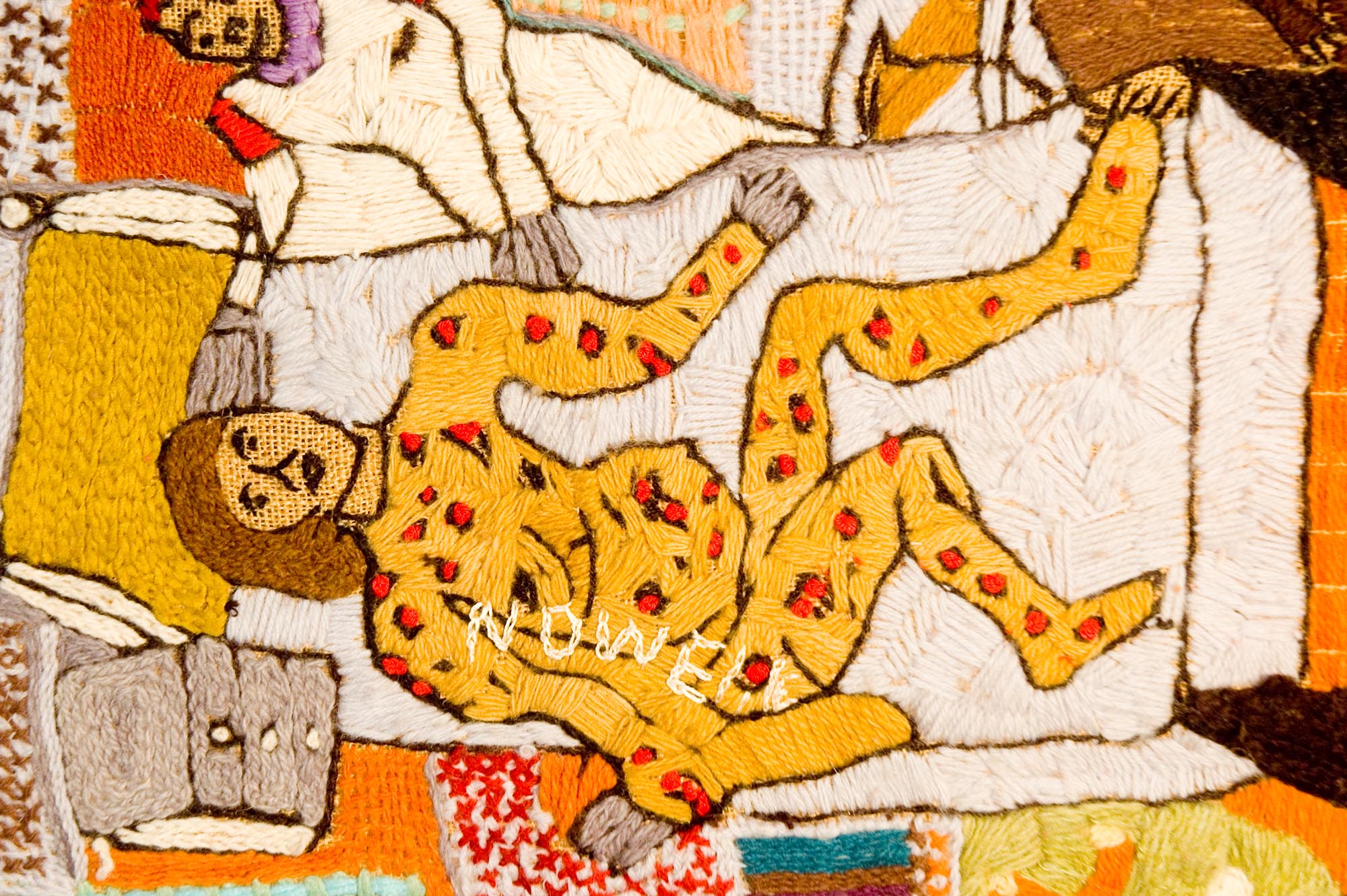
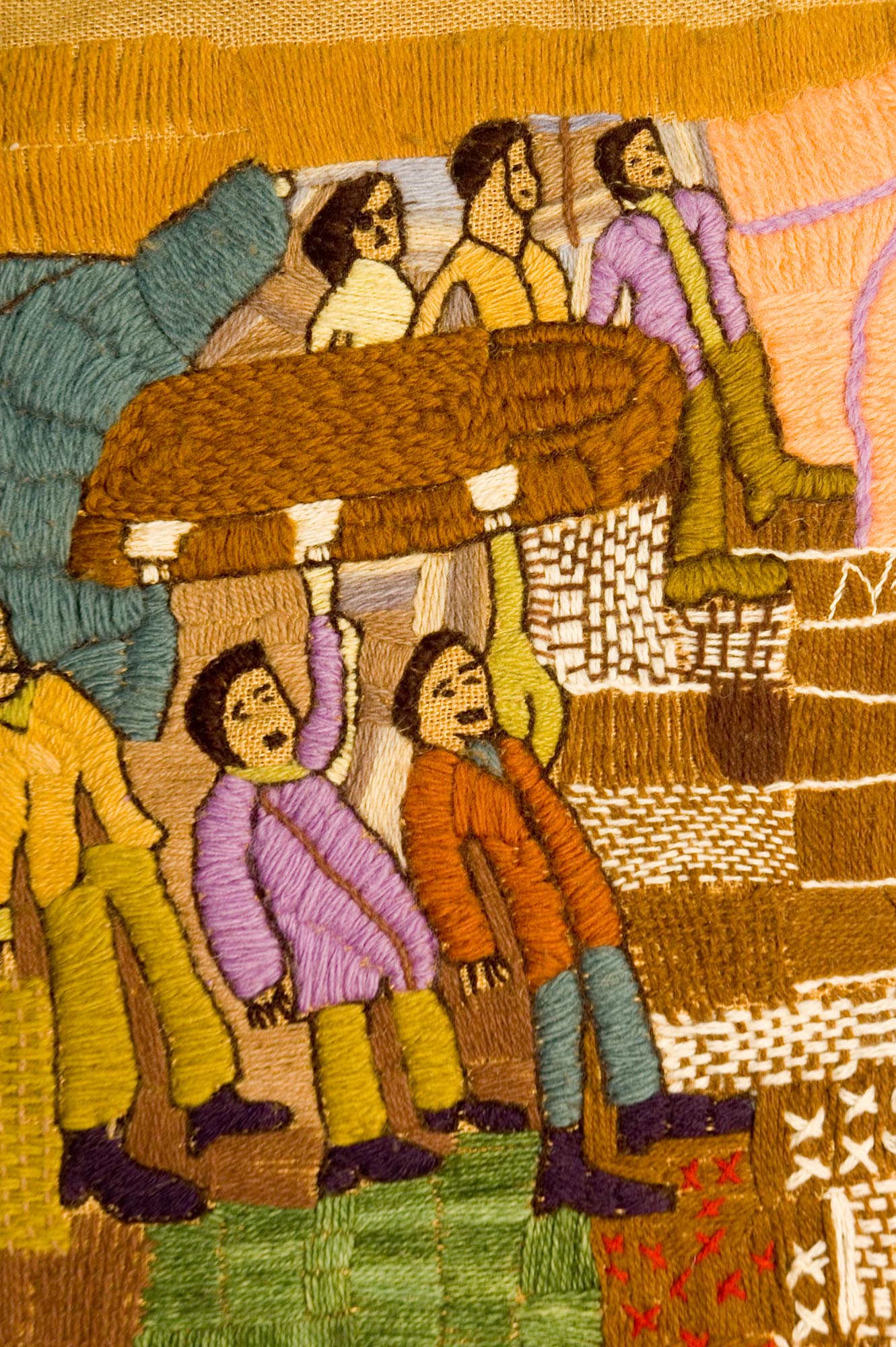
On either side of the cross are two women shown as saints: Susan Poliso and Lagina Mapuma. Both were respected figures in the community, known for their strength. The lower section tells the story of Susan’s youngest son, who returned home ill after working on fishing boats. He was treated for tuberculosis, improved briefly, and later died in Susan’s home in Hamburg. Coffins and a graveyard appear nearby.

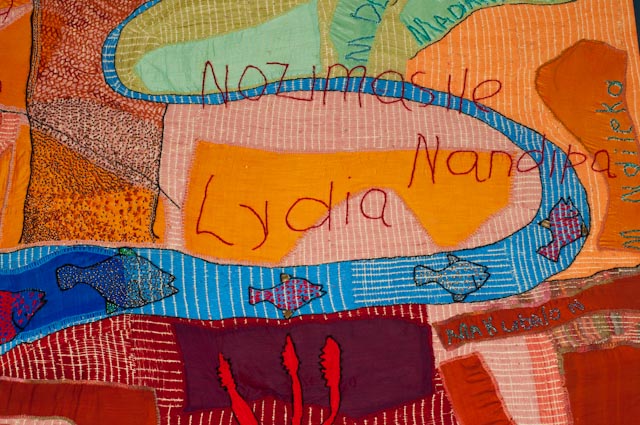
Between the scenes are embroidered names commemorating community members who had already died, along with the names of some of the embroiderers.

Language
Subjects
Extent
Format
Medium
Period
Style
Style/Period
Work Type
Location
Holding Institution
Holding Institution URL
Rights
Repository
Metadata Provided By
Interviewee
Interviewer
Search
Item Title The second layer of the Keiskamma Altarpiece
General Date 2006-01-01
Precise Date
Resource Type Exhibitions/Installations
Creator Keiskamma Art Collective
Contributor
Photographer
Description

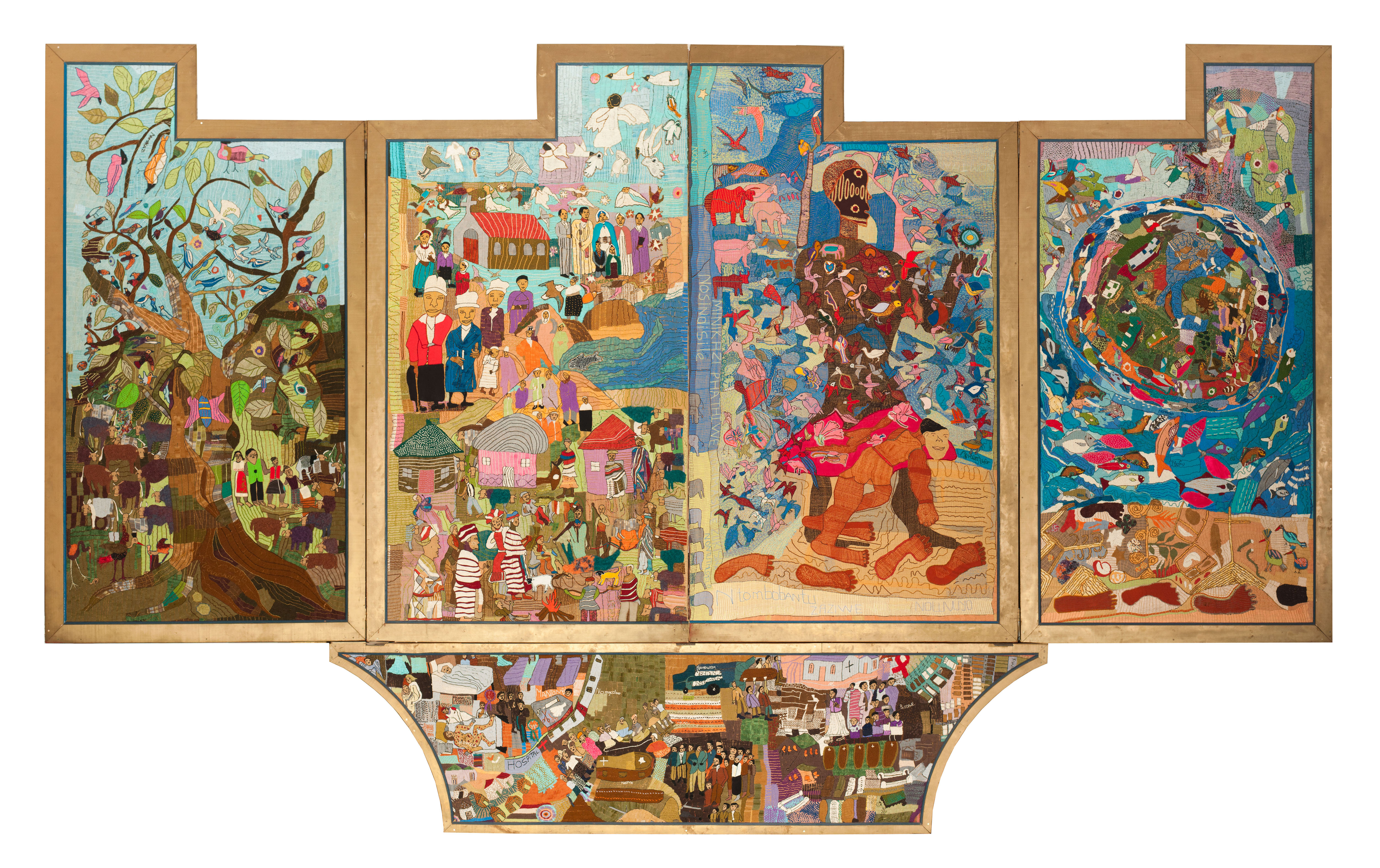
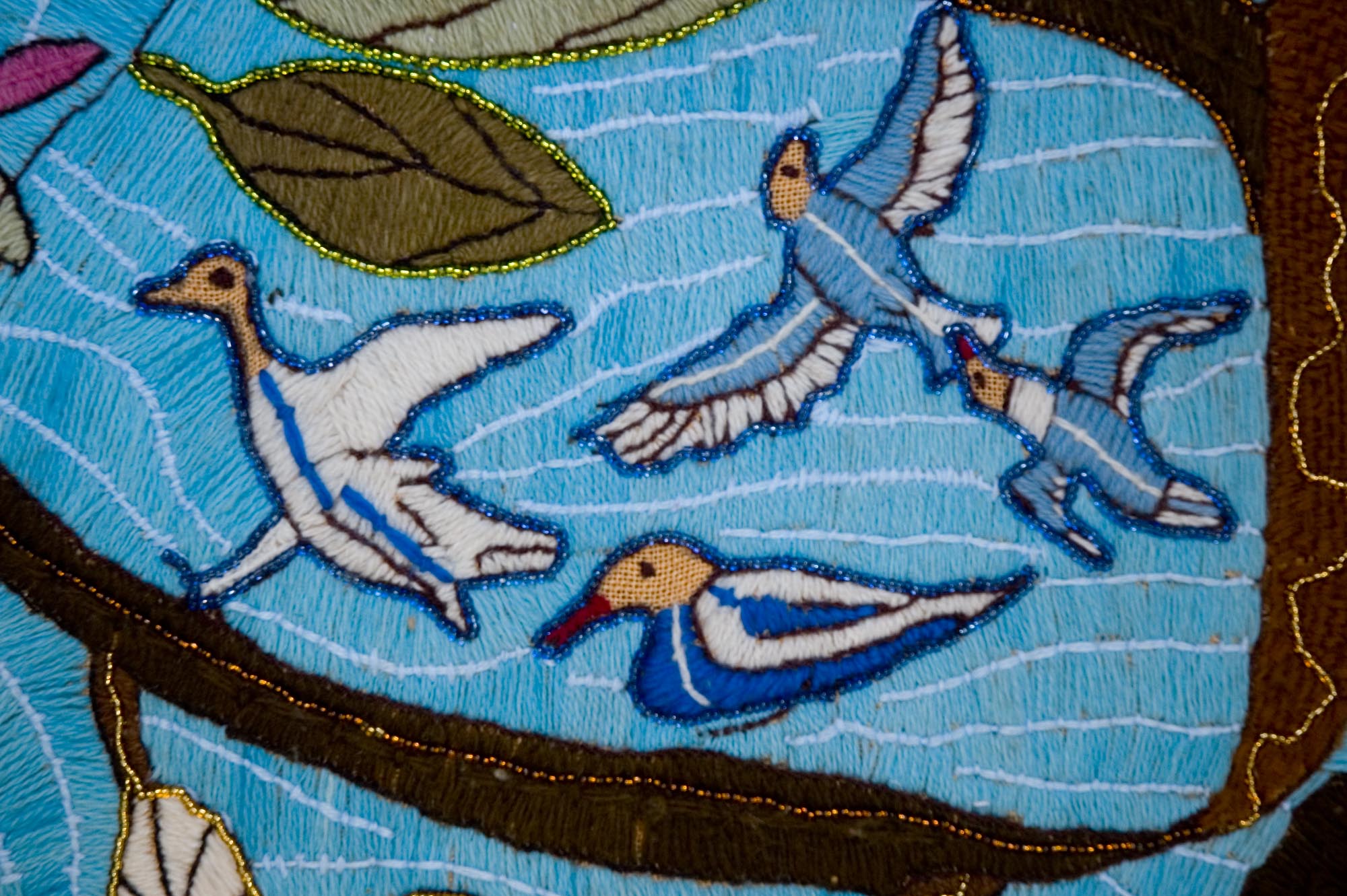
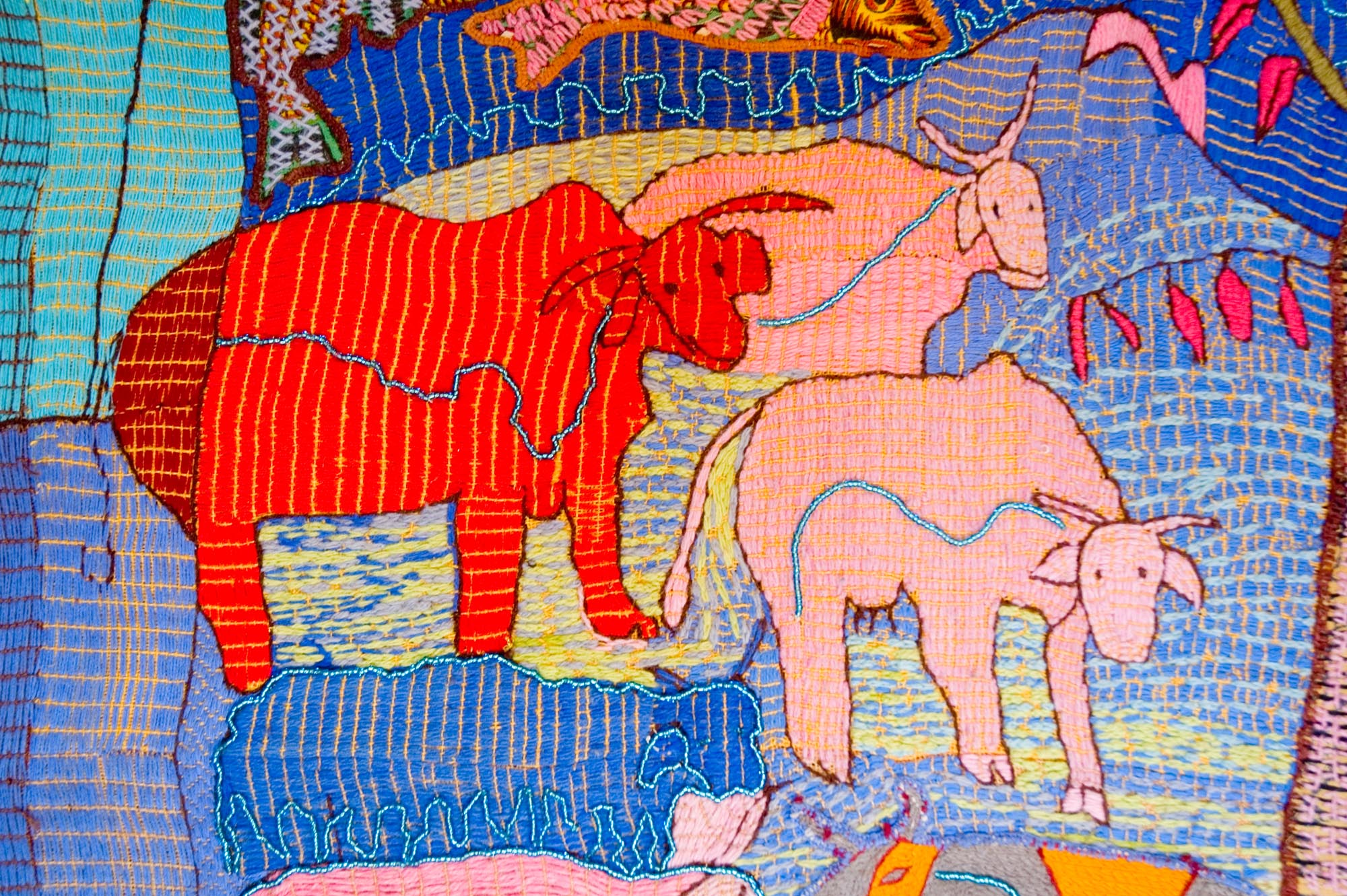
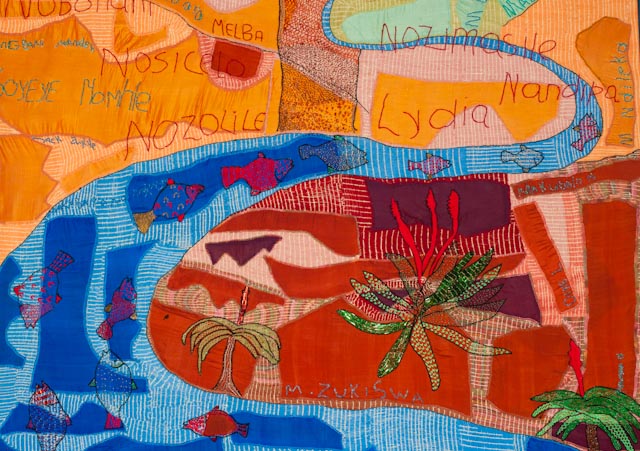
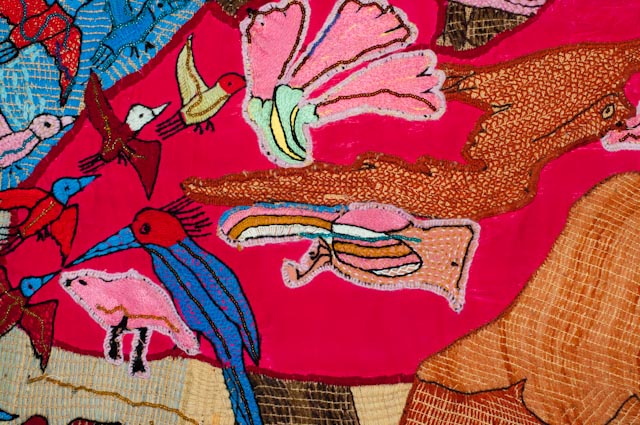
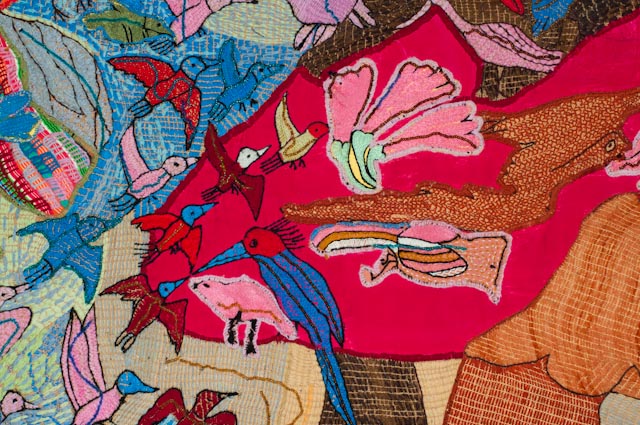
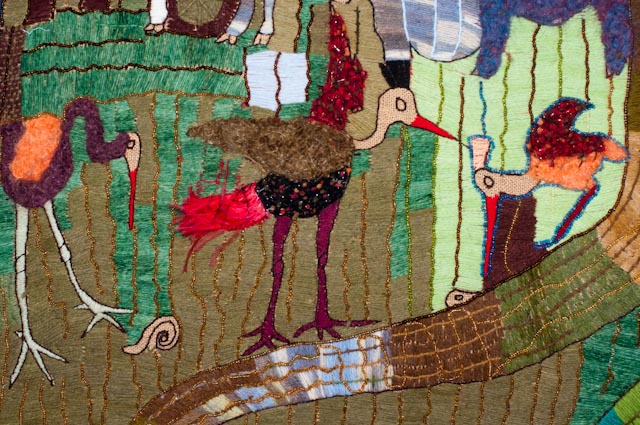
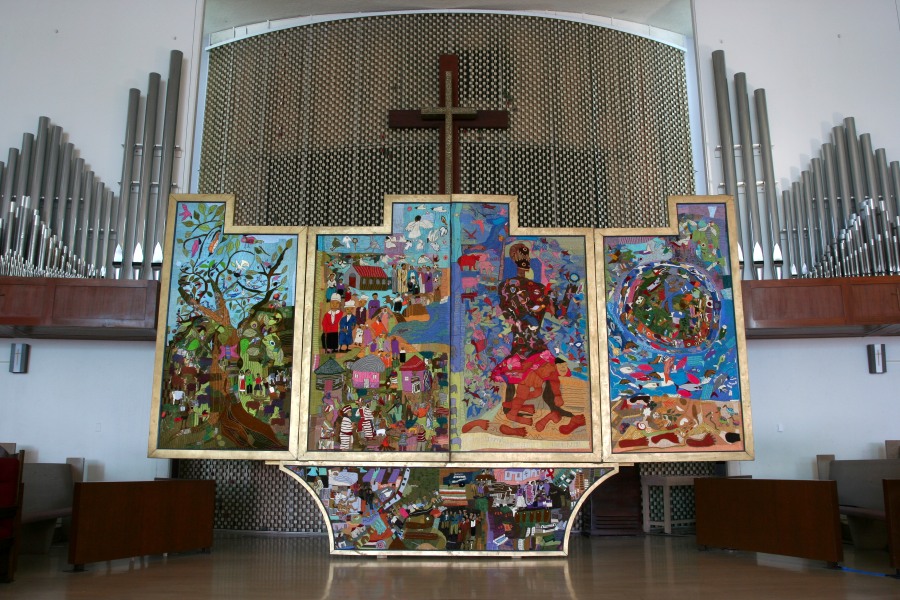
The second layer of the Keiskamma Altarpiece presents an imagined vision of Hamburg, South Africa, shaped by broad community involvement. This panel was created with a more informal visual style and reflects an effort to imagine the village without disease during the HIV/AIDS crisis. It corresponds to the Annunciation and Nativity panels of the Isenheim Altarpiece, which convey hope through religious narrative. Here, hope is expressed through scenes grounded in local life.

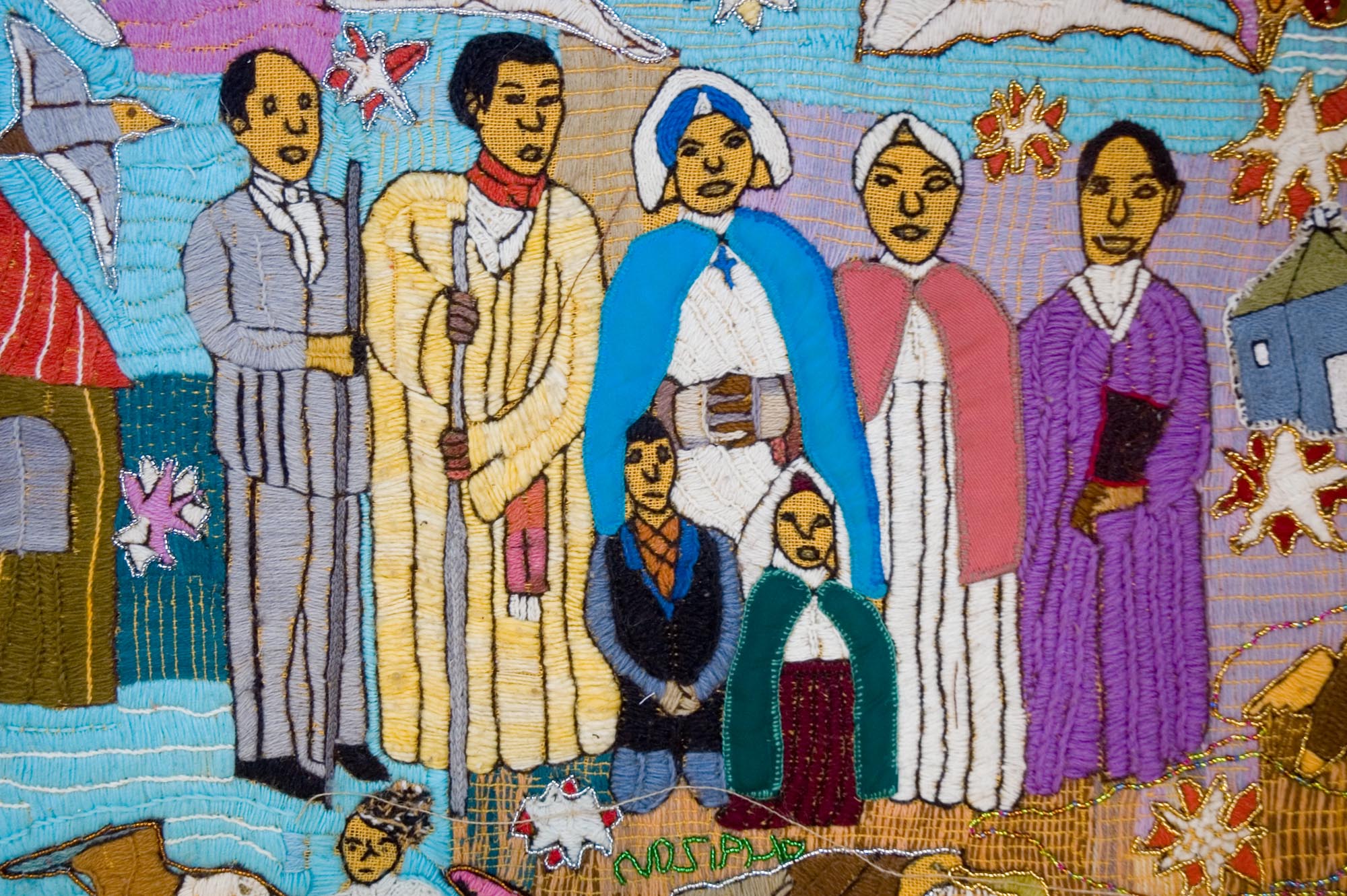
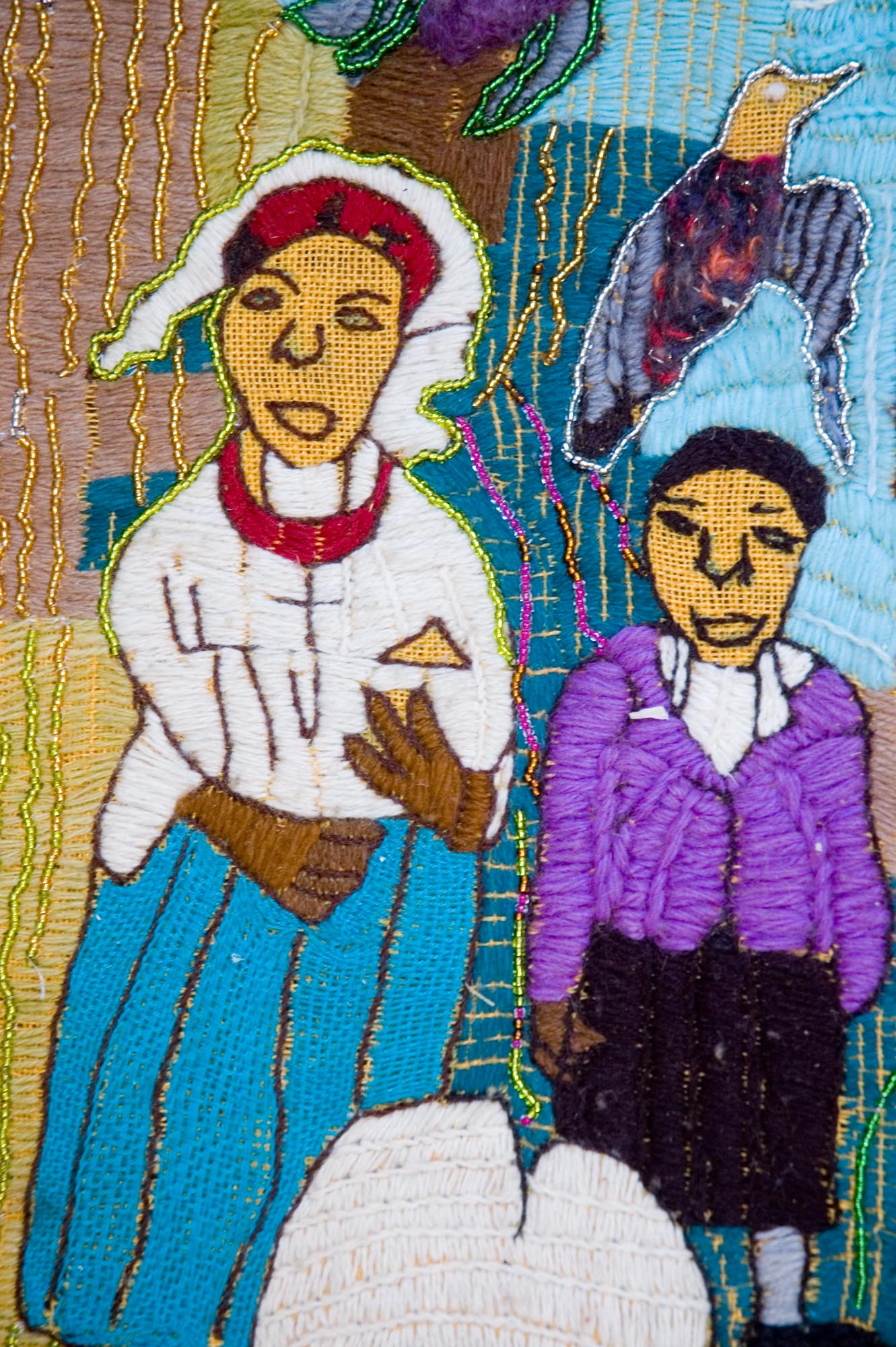
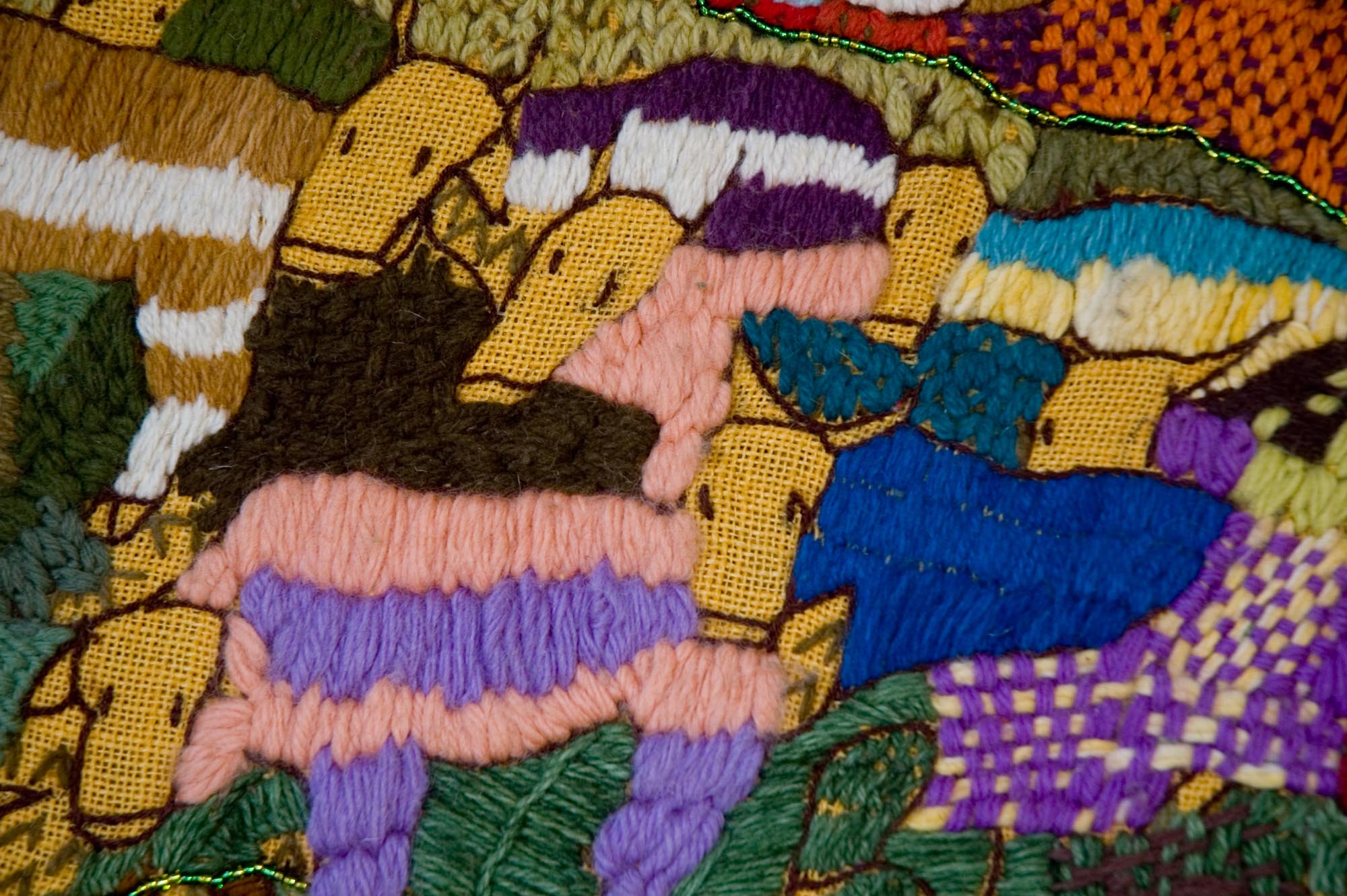
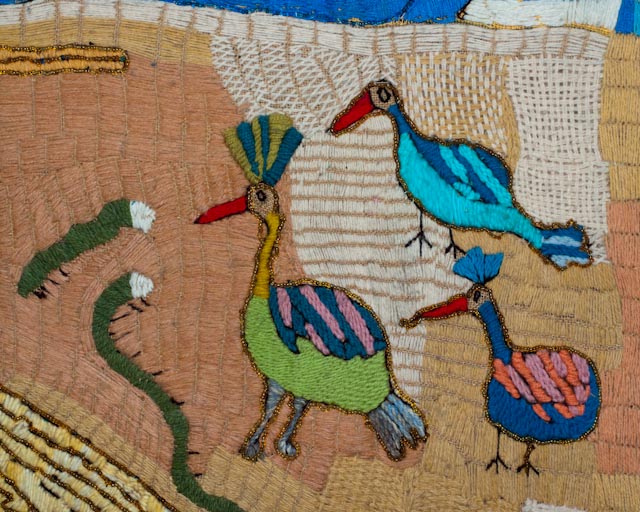
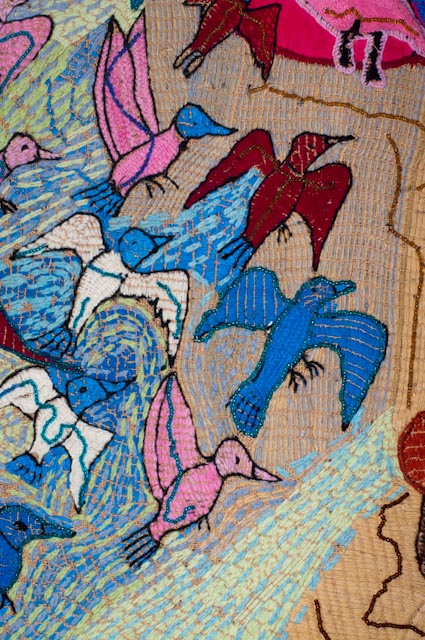
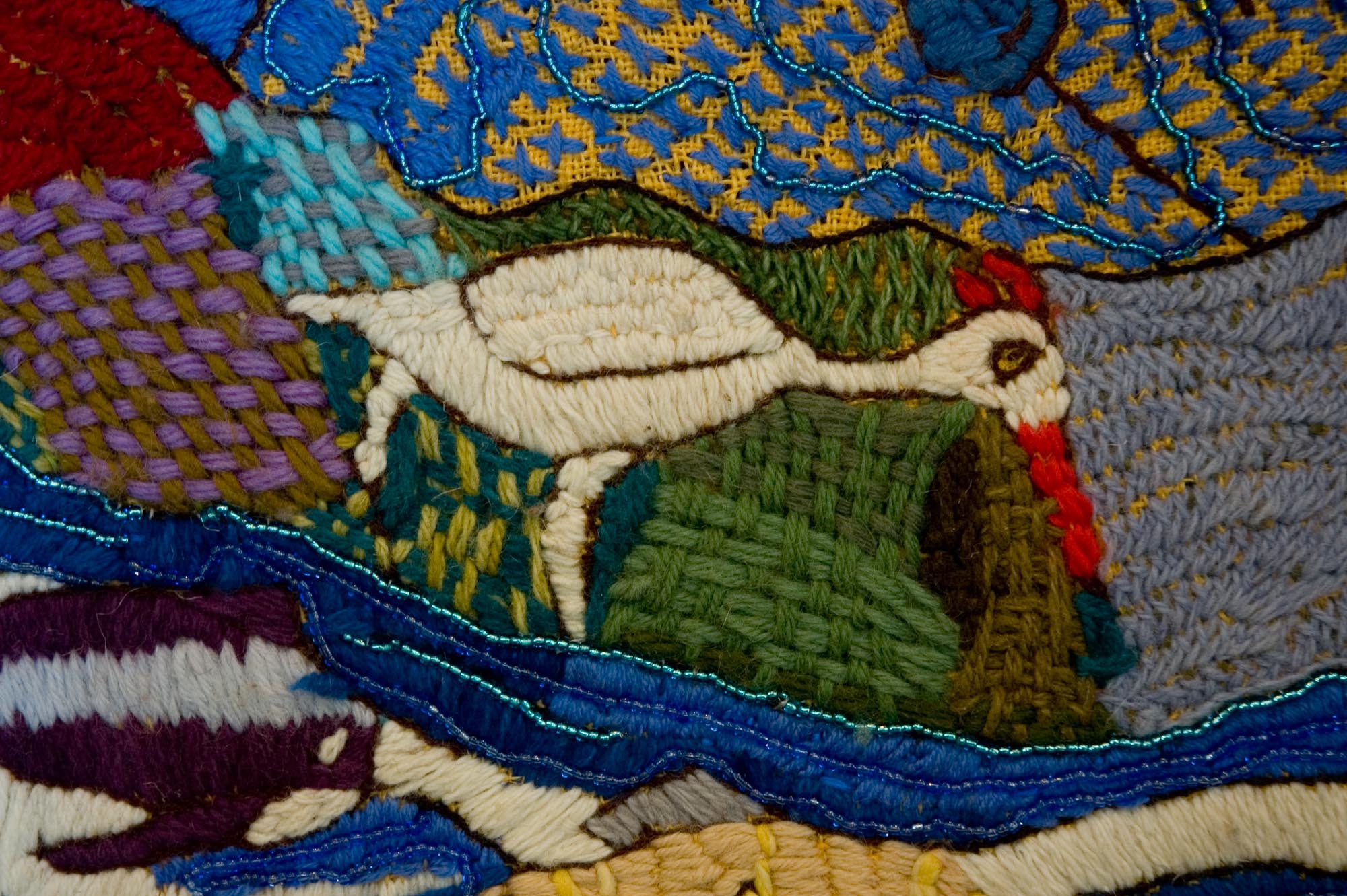
On the left stands a large coastal fig tree, a common feature in Hamburg that is associated with growth. At the center are representations of the religious groups present in the community, including traditional belief systems as well as Methodist, Anglican, and other Christian groups, shown through clothing and symbols.

One section features a local man known as Prophet Gaber, who created patterned designs in the sand after rain. His inclusion refers to creative activity within everyday life.

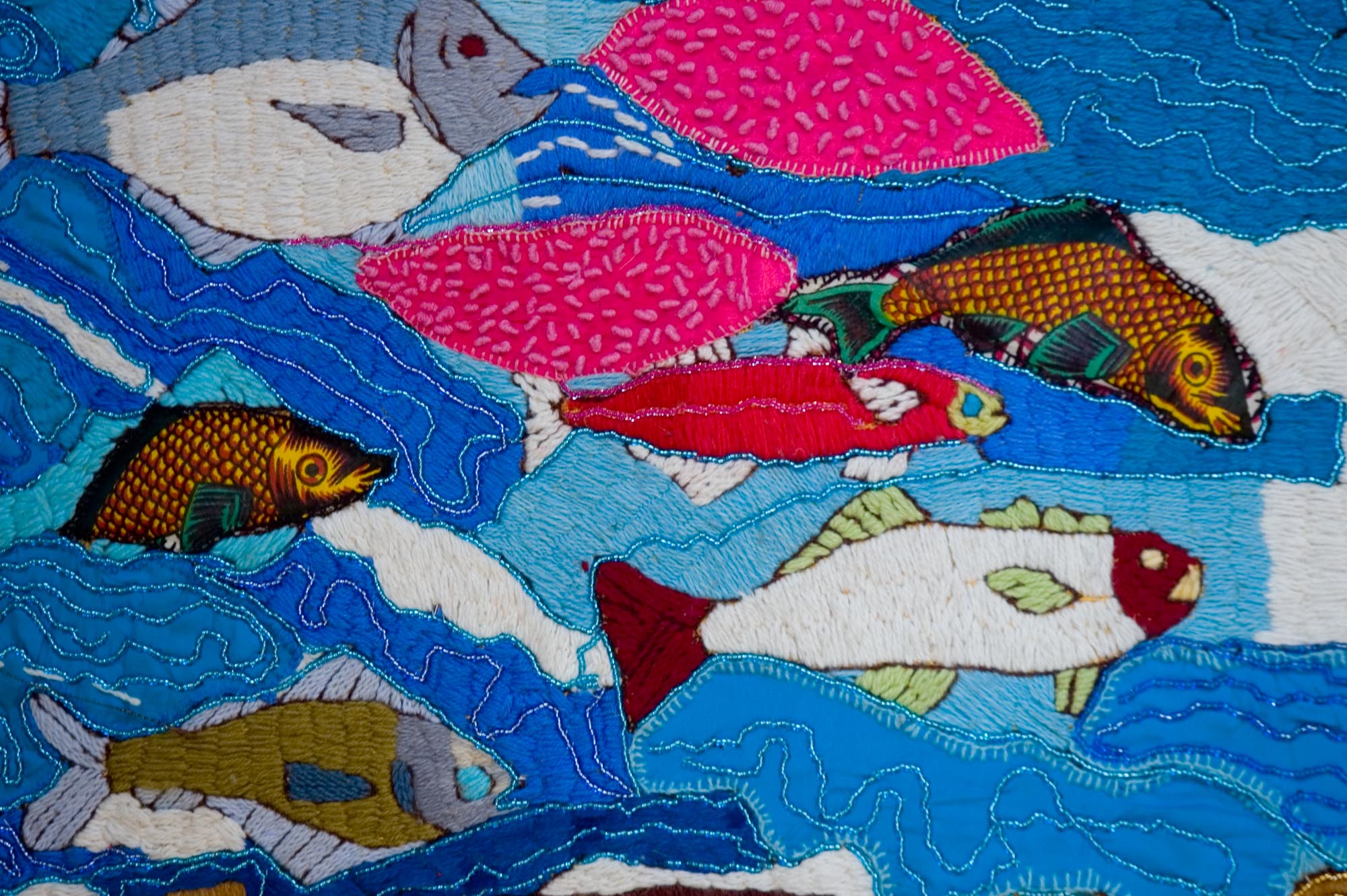
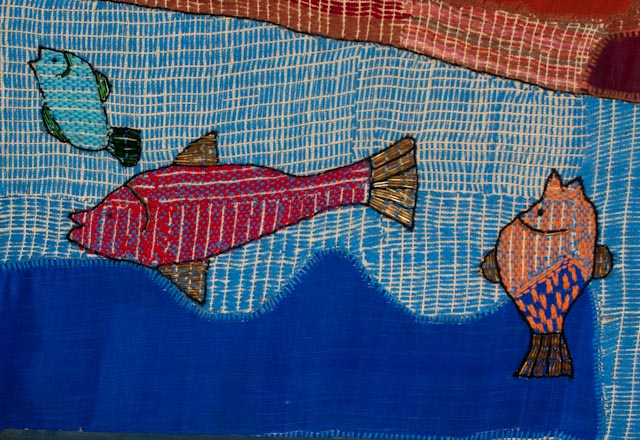
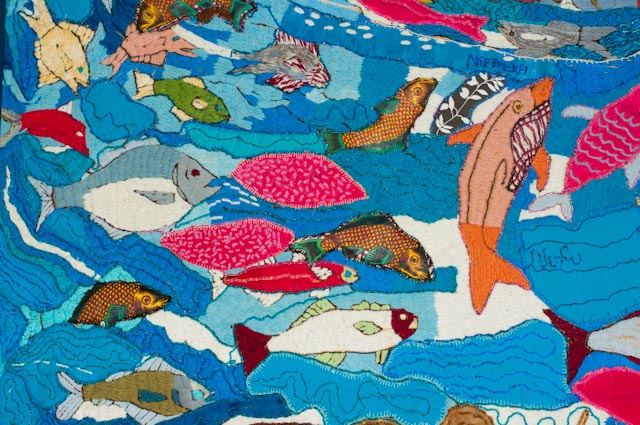
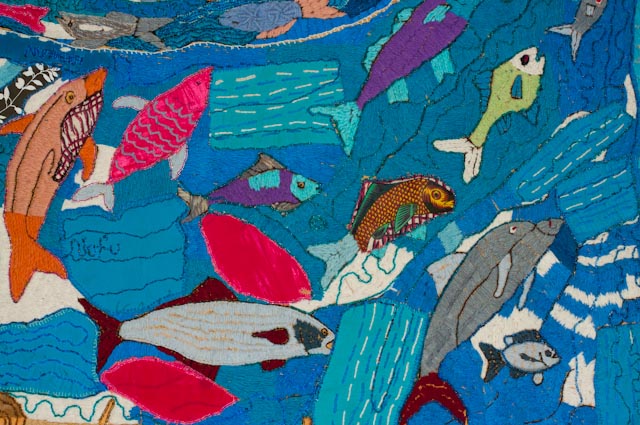
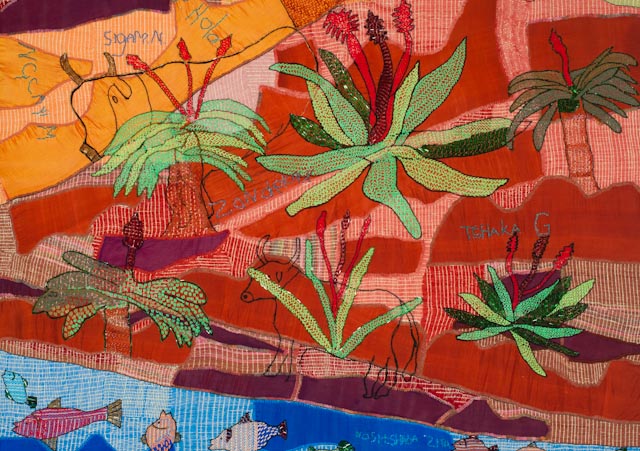
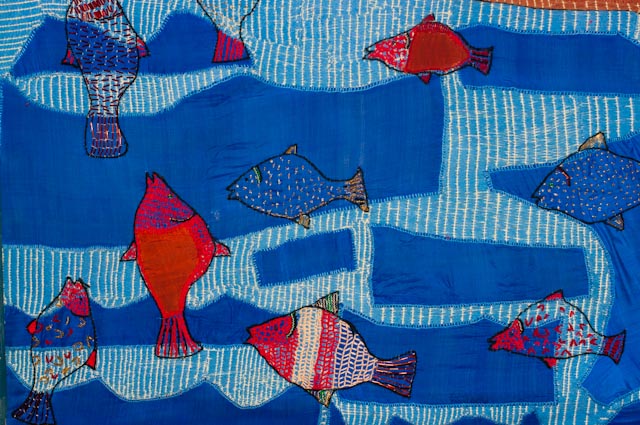
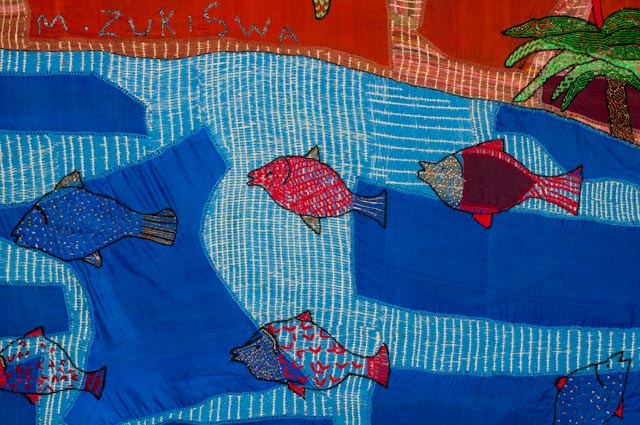
The final section presents Hamburg surrounded by water, including the river, lagoon, and sea, with a map of the village at the center. This scene presents an imagined version of Hamburg as a flourishing place, while acknowledging the contrast between its natural beauty and extreme poverty.

Language
Subjects
Extent
Format
Medium
Period
Style
Style/Period
Work Type
Location
Holding Institution
Holding Institution URL
Rights
Repository
Metadata Provided By
Interviewee
Interviewer
Search
Item Title The third layer of the Keiskamma Altarpiece
General Date 2006-01-01
Precise Date
Resource Type Exhibitions/Installations
Creator Keiskamma Art Collective
Contributor
Photographer Tanya Jordan
Description

The third layer of the Keiskamma Altarpiece departs from stitched panels and introduces photographs, marking a deliberate change in technique inspired by the sculptural final stage of the Isenheim Altarpiece. The photographs were taken by Tanya Jordan, a woman living in Hamburg, South Africa, who was involved in the project at the time. This layer centers on grandmothers, whose caregiving roles expanded during the HIV/AIDS crisis.

One photograph shows Susan Poliso with her grandson, Lichile, the child of her son Dumile, whose burial appears in the lower section of the first layer. Susan learned of the child’s existence after Dumile’s death and raised him in her home. Another photograph presents Eunice Mangwani, a community health worker and the first HIV educator in Hamburg. After returning from Cape Town in the early 2000s, Eunice led HIV education efforts in a community where little information had previously been available. She later traveled internationally with the altarpiece, speaking about the work and the lives it represents, and became a key spokesperson during its early exhibitions. She is shown with her three grandchildren, including one child who is HIV-positive and received treatment.

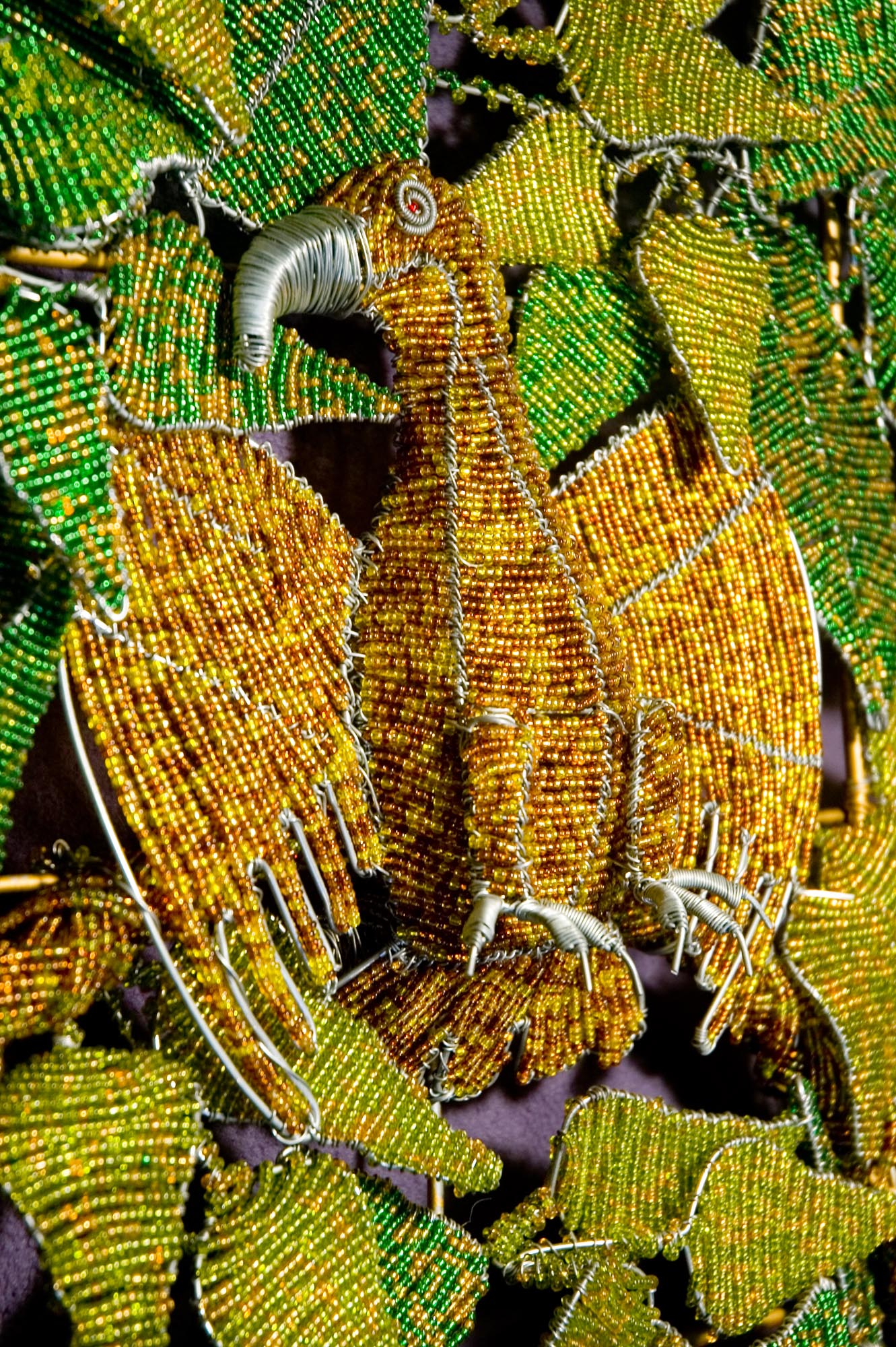
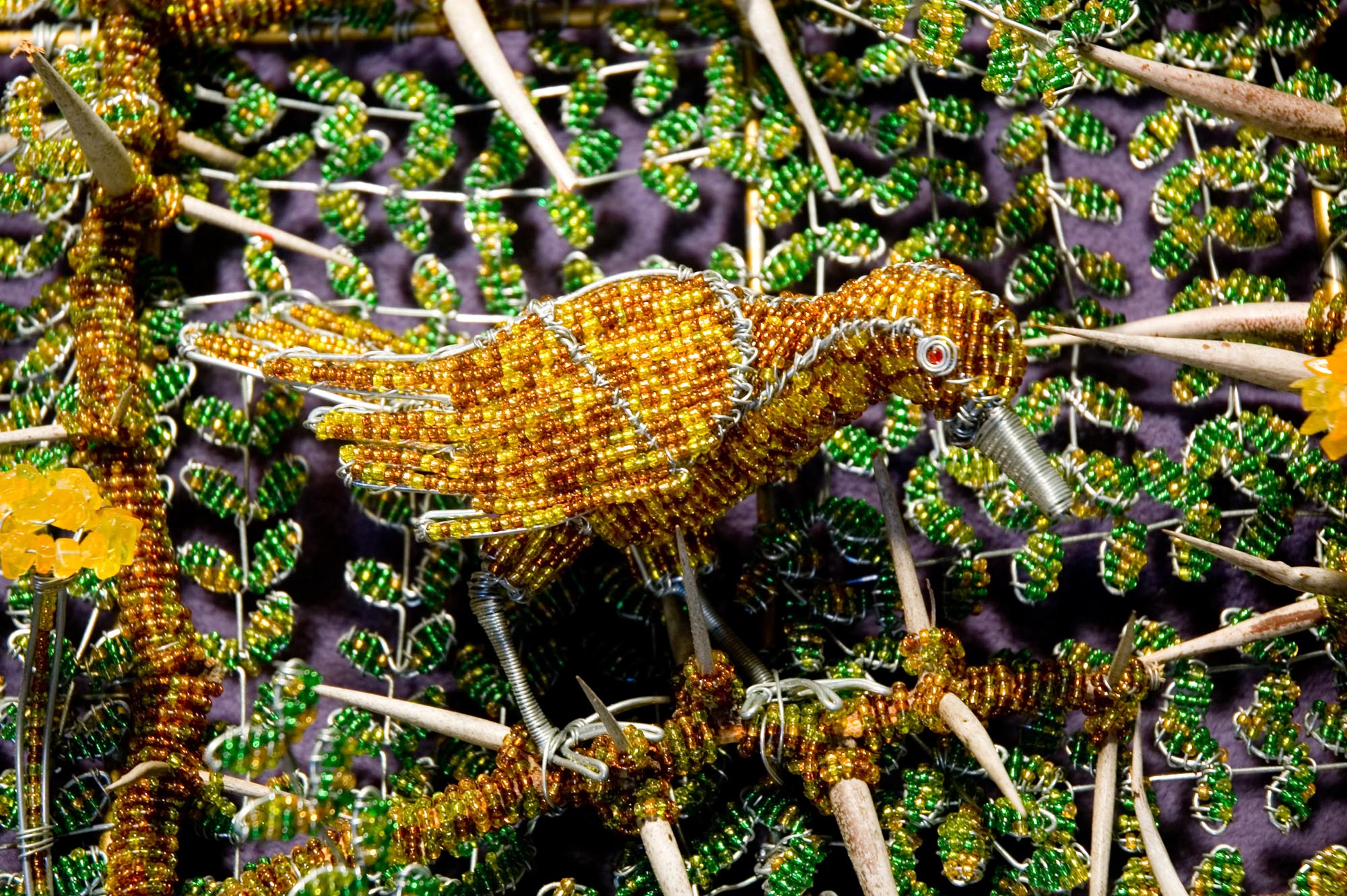
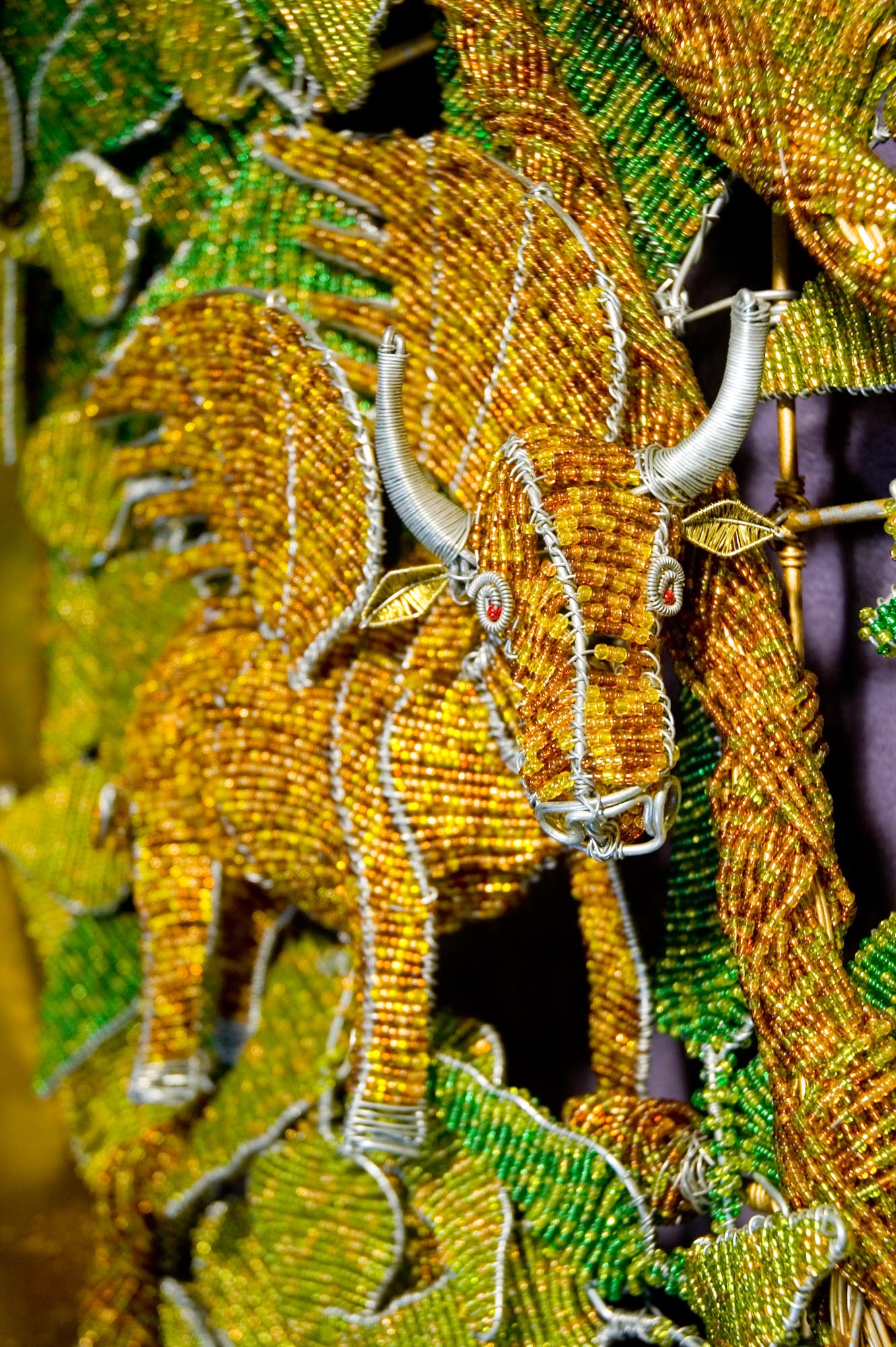
A third photograph features Caroline, a grandmother whose daughters returned to her household with their children. She is included in part for her contribution to the wire and beadwork above the photographs, which forms local trees, including erythrina and thorn acacia. The outer panels return to the Keiskamma River, fish, and surrounding water, situating care, survival, and advocacy within the local environment.

Language
Subjects
Extent
Format
Medium
Period
Style
Style/Period
Work Type
Location
Holding Institution
Holding Institution URL
Rights
Repository
Metadata Provided By
Interviewee
Interviewer
Search
Item Title The initial stage of The Keiskamma Altarpiece creation
General Date 2006-01-01
Precise Date
Resource Type Exhibitions/Installations
Creator Keiskamma Art Collective
Contributor
Photographer
Description

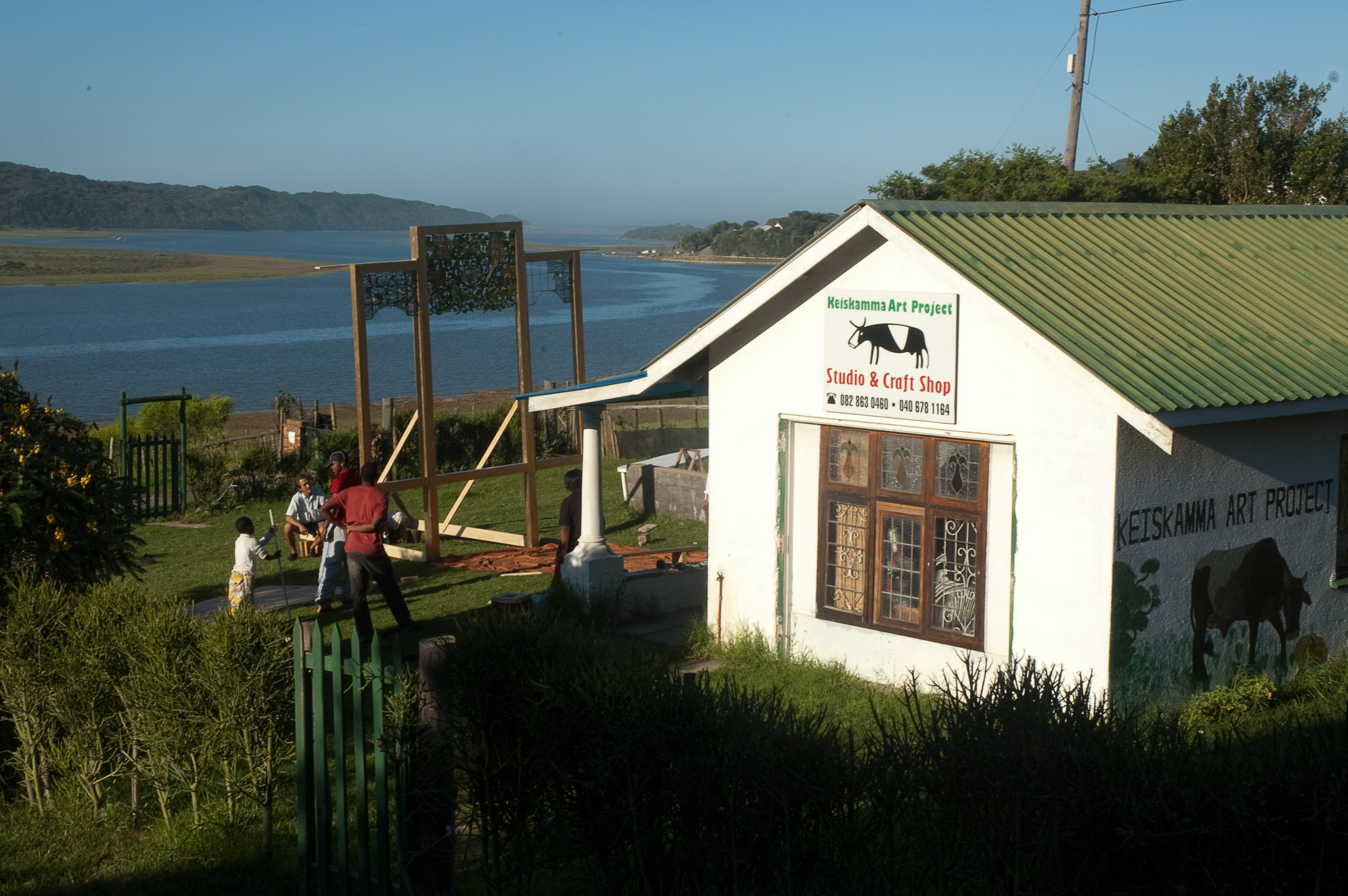
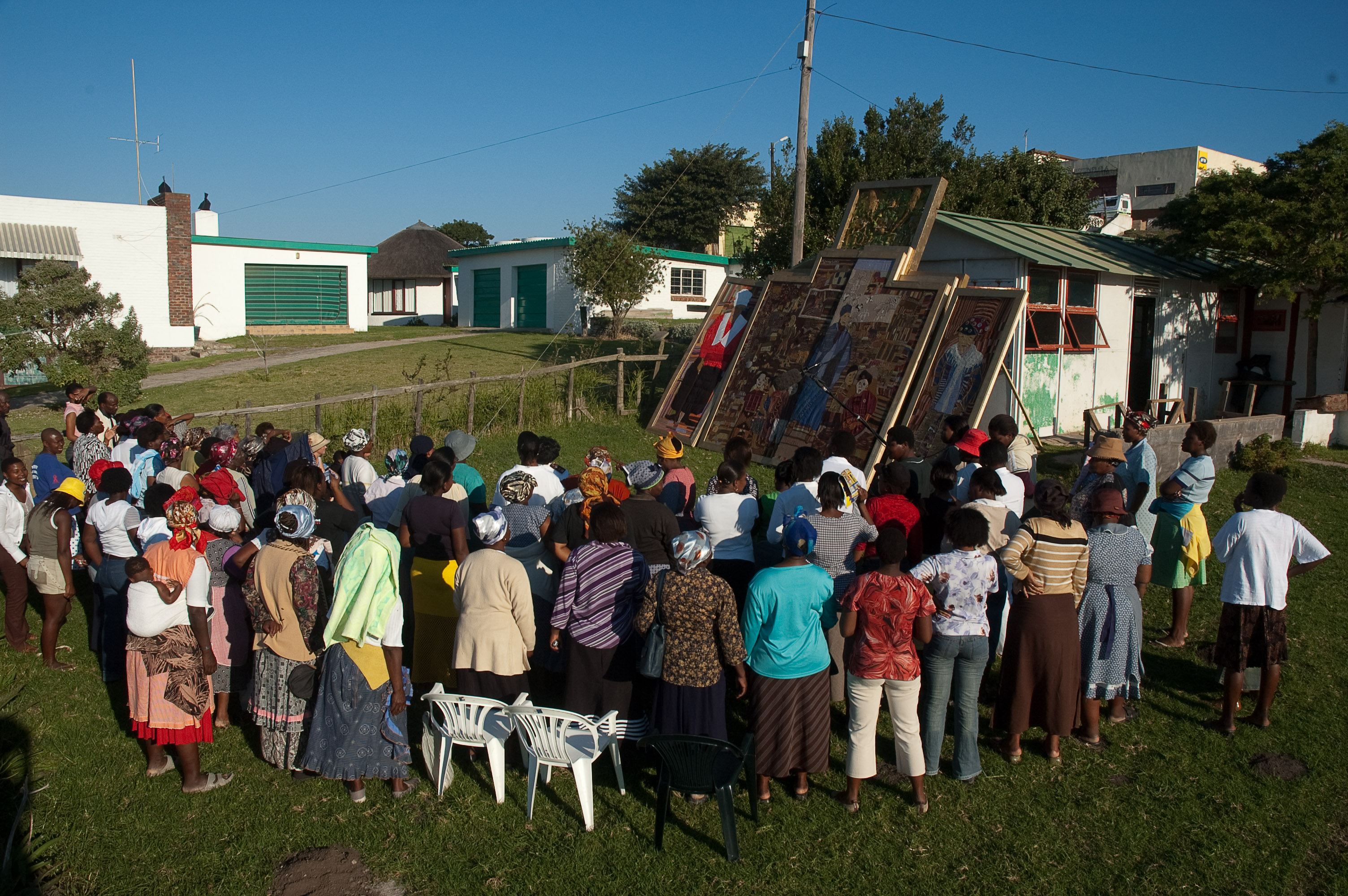
This monumental work, measuring 13 feet tall and 22 feet wide, was collaboratively created in the village of Hamburg, South Africa, by over 130 community members, mostly women.

Due to its massive scale, the artists often had to lay the pieces out on the grass outside the studio and use ladders to view the developing composition.

Language
Subjects
Extent
Format
Medium
Period
Style
Style/Period
Work Type
Location
Holding Institution
Holding Institution URL
Rights
Repository
Metadata Provided By
Interviewee
Interviewer
Search
Item Title The initial stage of The Keiskamma Altarpiece creation
General Date 2006-01-01
Precise Date
Resource Type Exhibitions/Installations
Creator Keiskamma Art Collective
Contributor
Photographer
Description

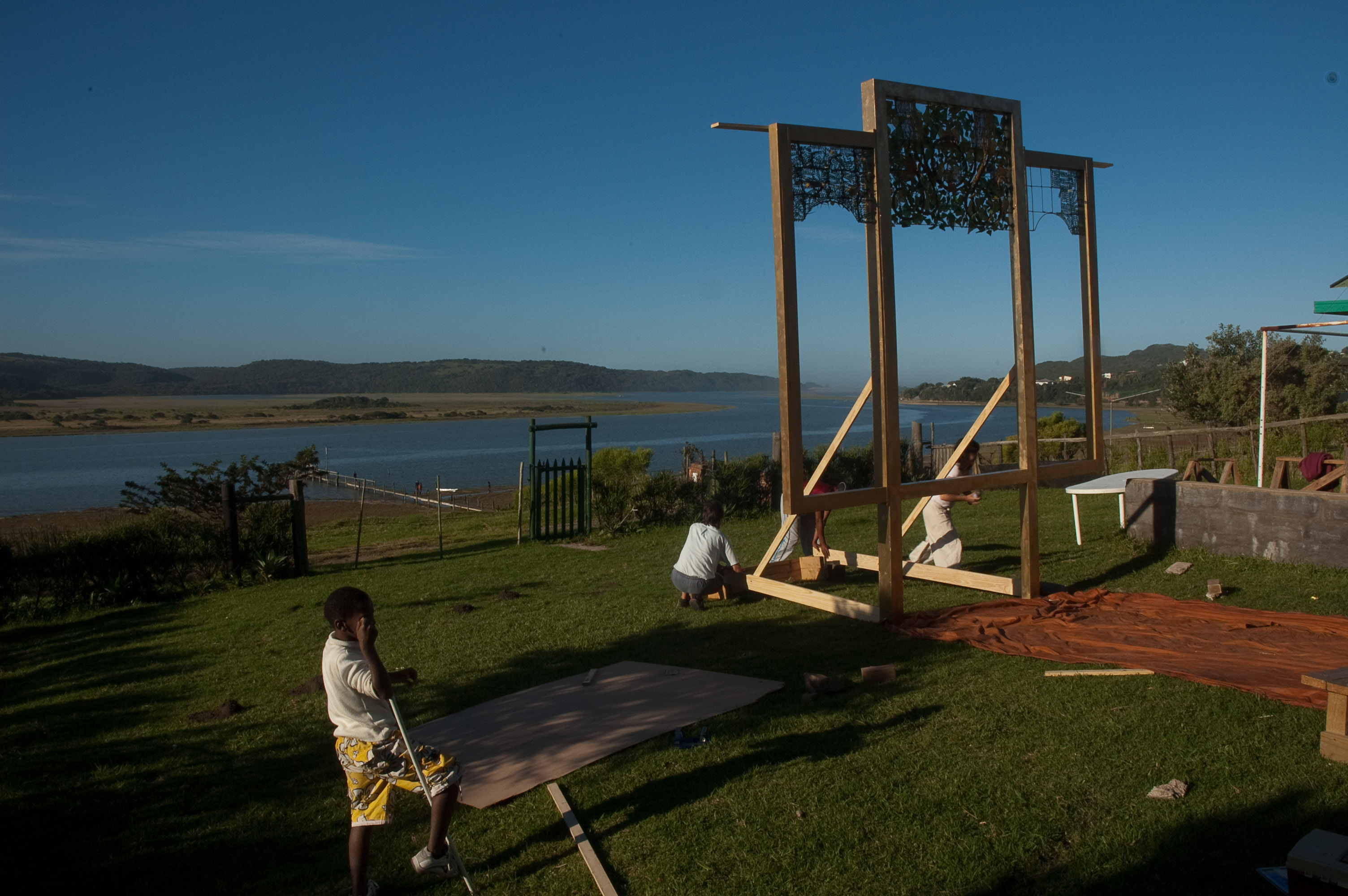
The artists assemble the sections of the altarpiece in the open landscape of Hamburg, framed by the Keiskamma River, a central symbol of the community’s identity and ancestral fishing heritage.

Language
Subjects
Extent
Format
Medium
Period
Style
Style/Period
Work Type
Location
Holding Institution
Holding Institution URL
Rights
Repository
Metadata Provided By
Interviewee
Interviewer
Search
Item Title The initial stage of The Keiskamma Altarpiece creation
General Date 2006-01-01
Precise Date
Resource Type Exhibitions/Installations
Creator Keiskamma Art Collective
Contributor
Photographer
Description

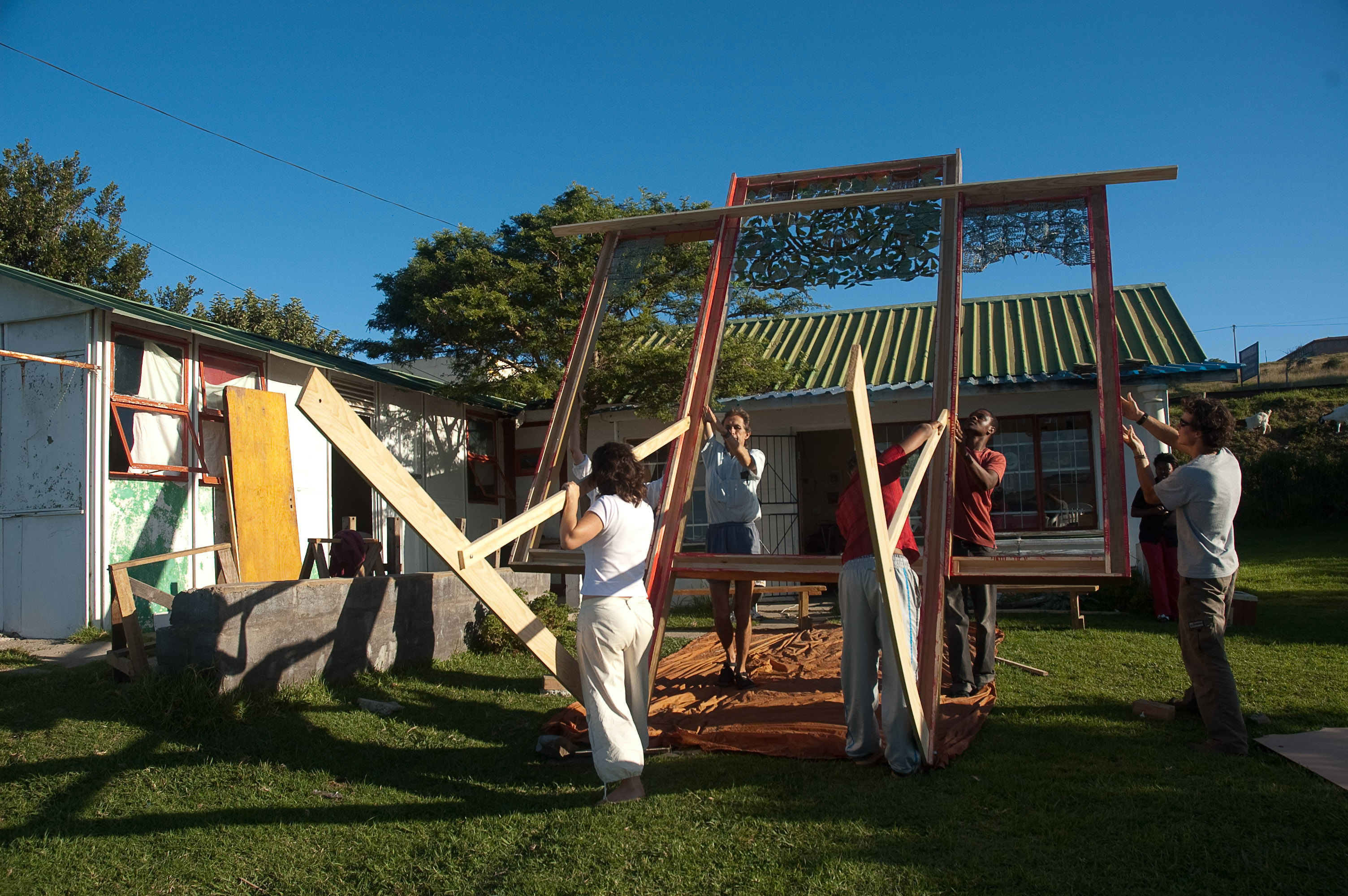
This image reveals the initial stage of the intricate structural frame and specialized three-way hinge system designed and built by Dr. Justus Hofmeyr, the husband of project founder Carol Hofmeyr. Beyond his technical role in stretching and securing the panels alongside handyman Jonathan Bertani, Justus served as a prominent medical doctor who actively fought against the South African government’s era of HIV denialism.

During a period when the state refused to acknowledge the virus or provide life-saving antiretrovirals, Dr. Hofmeyr risked his professional standing to administer nevirapine—a drug essential for preventing mother-to-child transmission. He was one of the first to use the medication in Hamburg, South Africa, by informing the Minister of Health he was conducting a "clinical trial," a strategy that allowed him to continue providing treatment without facing termination.

Providing critical care when HIV was otherwise treated as a state-sanctioned "death sentence," his courageous actions helped preserve the lives and dignity of the community members whose stories are told through the embroidery supported by this hand-built frame.

Language
Subjects
Extent
Format
Medium
Period
Style
Style/Period
Work Type
Location
Holding Institution
Holding Institution URL
Rights
Repository
Metadata Provided By
Interviewee
Interviewer
Search
Item Title The initial stage of The Keiskamma Altarpiece creation with artists
General Date 2006-01-01
Precise Date
Resource Type Exhibitions/Installations
Creator Keiskamma Art Collective
Contributor
Photographer
Description

"By the time we made it, which was very early on in Keiskamma, certain people had emerged as better at drawing. I had never wanted there to be artists and not artists, because I said everyone’s an artist." – Carol Hofmeyr

Language
Subjects
Extent
Format
Medium
Period
Style
Style/Period
Work Type
Location
Holding Institution
Holding Institution URL
Rights
Repository
Metadata Provided By
Interviewee
Interviewer
Search
Item Title The Widow (Detail of Layer 1)
General Date 2006-01-01
Precise Date
Resource Type Exhibitions/Installations
Creator Keiskamma Art Collective
Contributor
Photographer
Description

Medium: Collaborative embroidery and mixed media on masonite.

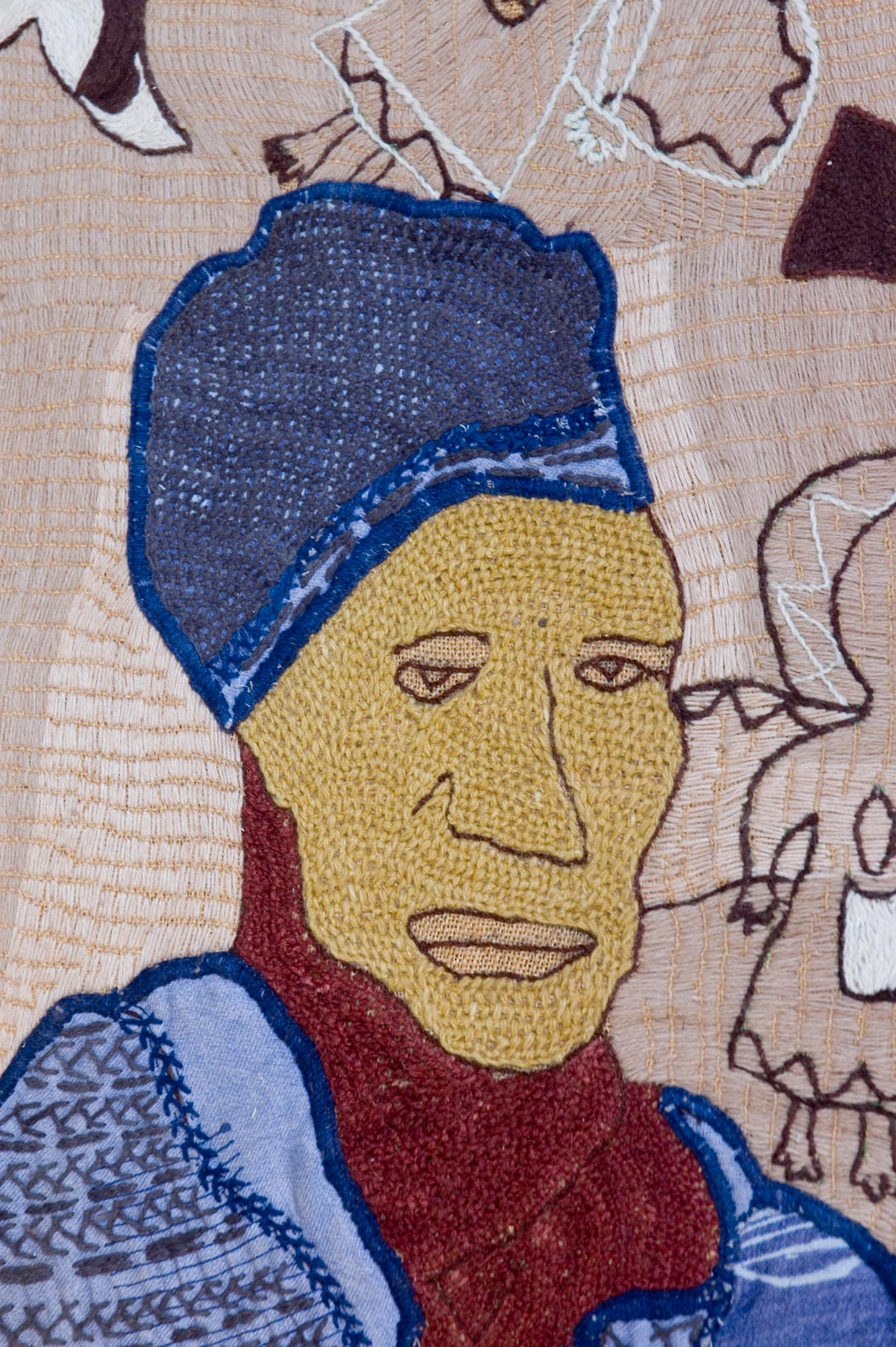
This detail portrays a widow, a central figure born from Dr. Carol Hofmeyr’s conceptual reckoning as she sought to translate the traditional crucifixion of the Isenheim Altarpiece (Colmar, France) into a contemporary Hamburg, South Africa context.

While Matthias Grünewald’s 16th-century painted original flanked the cross with saints relevant to the plague, Hofmeyr found her inspiration in the everyday sight of mourning clothes on a rural road.

By placing this young mother in front of the cross rather than upon it, the work reimagines the divine sacrifice through the domestic reality of women left behind by the epidemic. Her husband, like many in the community, returned from the cities only to succumb to illness, leaving a legacy of grief that the artists have stitched into a new form of sacred iconography.

Language
Subjects
Extent
Format
Medium
Period
Style
Style/Period
Work Type
Location
Holding Institution
Holding Institution URL
Rights
Repository
Metadata Provided By
Interviewee
Interviewer
Search
Item Title
General Date 2006-01-01
Precise Date
Resource Type Exhibitions/Installations
Creator Keiskamma Art Collective
Contributor
Photographer
Description

layer 2

Language
Subjects
Extent
Format
Medium
Period
Style
Style/Period
Work Type
Location
Holding Institution
Holding Institution URL
Rights
Repository
Metadata Provided By
Interviewee
Interviewer
Search
Item Title
General Date
Precise Date
Resource Type
Creator
Contributor
Photographer
Description
Language
Subjects
Extent
Format
Medium
Period
Style
Style/Period
Work Type
Location
Holding Institution
Holding Institution URL
Rights
Repository
Metadata Provided By
Interviewee
Interviewer
Search
Item Title
General Date
Precise Date
Resource Type
Creator
Contributor
Photographer
Description
Language
Subjects
Extent
Format
Medium
Period
Style
Style/Period
Work Type
Location
Holding Institution
Holding Institution URL
Rights
Repository
Metadata Provided By
Interviewee
Interviewer
Search
Item Title
General Date
Precise Date
Resource Type
Creator
Contributor
Photographer
Description

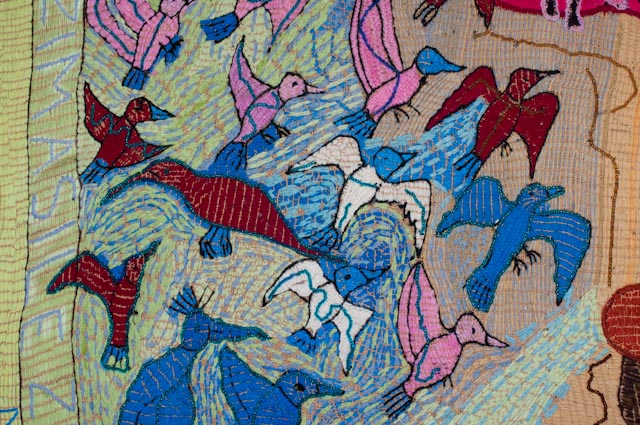
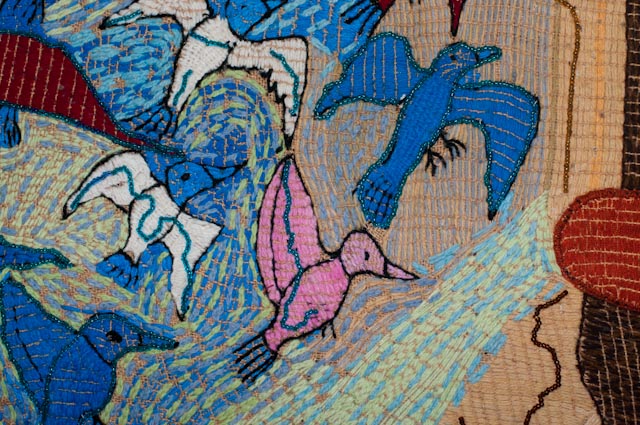
layer 2 the bird on the fig tree

Language
Subjects
Extent
Format
Medium
Period
Style
Style/Period
Work Type
Location
Holding Institution
Holding Institution URL
Rights
Repository
Metadata Provided By
Interviewee
Interviewer
Search
Item Title
General Date
Precise Date
Resource Type
Creator
Contributor
Photographer
Description

layer 1

Language
Subjects
Extent
Format
Medium
Period
Style
Style/Period
Work Type
Location
Holding Institution
Holding Institution URL
Rights
Repository
Metadata Provided By
Interviewee
Interviewer
Search
Item Title Layer 2, Religious Life in Hamburg
General Date 2006-01-01
Precise Date
Resource Type
Creator
Contributor
Photographer
Description

Medium: Collaborative embroidery and mixed media on masonite.

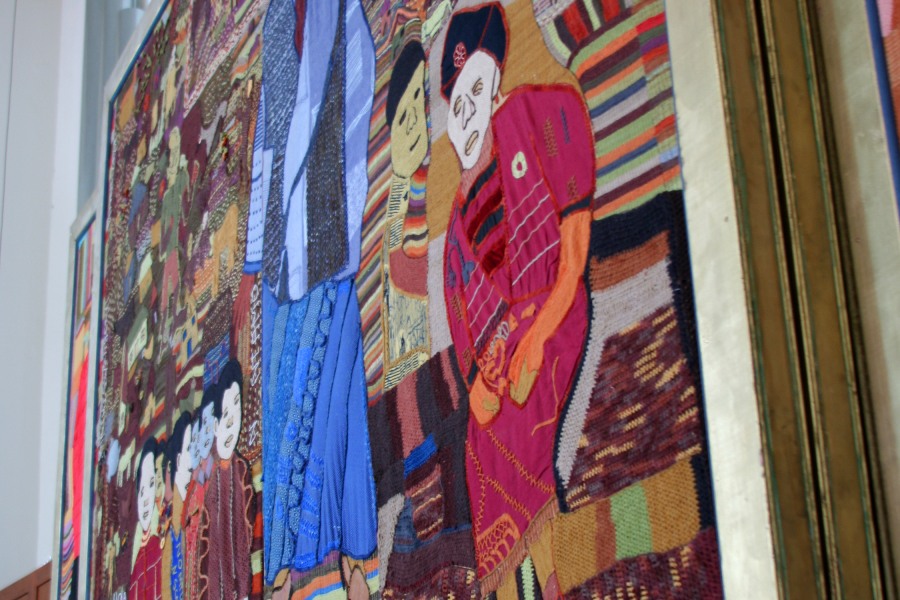
This central panel of the second layer documents the various religious groups active within the village of Hamburg, South Africa.

The composition, designed by the local women, depicts traditional religion at the base, followed by the specific uniforms of Methodist and Anglican church members, and other non-aligned Christian groups.

These scenes serve as a collective reimagining of Hamburg without disease, where the presence of these diverse belief systems offered a sense of hope during the height of the HIV crisis.

Language
Subjects
Extent
Format
Medium
Period
Style
Style/Period
Work Type
Location
Holding Institution
Holding Institution URL
Rights
Repository
Metadata Provided By
Interviewee
Interviewer
Search
Item Title Layer 2, Religious Life in Hamburg
General Date 2006-01-01
Precise Date
Resource Type
Creator
Contributor
Photographer
Description

Medium: Collaborative embroidery and mixed media on masonite.

This close-up reveals the intricate embroidery used to depict the church uniforms that signify various religious groups within Hamburg, South Africa.

The artists utilized these distinct garments as a visual narrative of the village’s faith structures, which served as central elements in their collective effort to reimagine a community defined by hope rather than disease

Language
Subjects
Extent
Format
Medium
Period
Style
Style/Period
Work Type
Location
Holding Institution
Holding Institution URL
Rights
Repository
Metadata Provided By
Interviewee
Interviewer
Search
Item Title
General Date
Precise Date
Resource Type
Creator
Contributor
Photographer
Description

layer 2

Language
Subjects
Extent
Format
Medium
Period
Style
Style/Period
Work Type
Location
Holding Institution
Holding Institution URL
Rights
Repository
Metadata Provided By
Interviewee
Interviewer
Search
Item Title
General Date
Precise Date
Resource Type
Creator
Contributor
Photographer
Description

layer 3

Language
Subjects
Extent
Format
Medium
Period
Style
Style/Period
Work Type
Location
Holding Institution
Holding Institution URL
Rights
Repository
Metadata Provided By
Interviewee
Interviewer
Search
Item Title
General Date
Precise Date
Resource Type
Creator
Contributor
Photographer
Description

layer 3

Language
Subjects
Extent
Format
Medium
Period
Style
Style/Period
Work Type
Location
Holding Institution
Holding Institution URL
Rights
Repository
Metadata Provided By
Interviewee
Interviewer
Search
Item Title
General Date
Precise Date
Resource Type
Creator
Contributor
Photographer
Description

layer 3

Language
Subjects
Extent
Format
Medium
Period
Style
Style/Period
Work Type
Location
Holding Institution
Holding Institution URL
Rights
Repository
Metadata Provided By
Interviewee
Interviewer
Search
Item Title
General Date
Precise Date
Resource Type
Creator
Contributor
Photographer
Description

layer 3

Language
Subjects
Extent
Format
Medium
Period
Style
Style/Period
Work Type
Location
Holding Institution
Holding Institution URL
Rights
Repository
Metadata Provided By
Interviewee
Interviewer
Search
Item Title
General Date
Precise Date
Resource Type
Creator
Contributor
Photographer
Description

bottom part

Language
Subjects
Extent
Format
Medium
Period
Style
Style/Period
Work Type
Location
Holding Institution
Holding Institution URL
Rights
Repository
Metadata Provided By
Interviewee
Interviewer
Search
Item Title
General Date
Precise Date
Resource Type
Creator
Contributor
Photographer
Description

bottom part

Language
Subjects
Extent
Format
Medium
Period
Style
Style/Period
Work Type
Location
Holding Institution
Holding Institution URL
Rights
Repository
Metadata Provided By
Interviewee
Interviewer
Search
Item Title
General Date
Precise Date
Resource Type
Creator
Contributor
Photographer
Description

bottom part

Language
Subjects
Extent
Format
Medium
Period
Style
Style/Period
Work Type
Location
Holding Institution
Holding Institution URL
Rights
Repository
Metadata Provided By
Interviewee
Interviewer
Search
Item Title
General Date
Precise Date
Resource Type
Creator
Contributor
Photographer
Description

layer 3

Language
Subjects
Extent
Format
Medium
Period
Style
Style/Period
Work Type
Location
Holding Institution
Holding Institution URL
Rights
Repository
Metadata Provided By
Interviewee
Interviewer
Search
Item Title
General Date
Precise Date
Resource Type
Creator
Contributor
Photographer
Description

layer 3

Language
Subjects
Extent
Format
Medium
Period
Style
Style/Period
Work Type
Location
Holding Institution
Holding Institution URL
Rights
Repository
Metadata Provided By
Interviewee
Interviewer
Search
Item Title
General Date
Precise Date
Resource Type
Creator
Contributor
Photographer
Description

layer 3 the Keiskamma liver

Language
Subjects
Extent
Format
Medium
Period
Style
Style/Period
Work Type
Location
Holding Institution
Holding Institution URL
Rights
Repository
Metadata Provided By
Interviewee
Interviewer
Search
Item Title
General Date
Precise Date
Resource Type
Creator
Contributor
Photographer
Description

layer 3 the Keiskamma liver

Language
Subjects
Extent
Format
Medium
Period
Style
Style/Period
Work Type
Location
Holding Institution
Holding Institution URL
Rights
Repository
Metadata Provided By
Interviewee
Interviewer
Search
Item Title
General Date
Precise Date
Resource Type
Creator
Contributor
Photographer
Description

Leyer 3 the Keiskamma liver

Language
Subjects
Extent
Format
Medium
Period
Style
Style/Period
Work Type
Location
Holding Institution
Holding Institution URL
Rights
Repository
Metadata Provided By
Interviewee
Interviewer
Search
Item Title
General Date
Precise Date
Resource Type
Creator
Contributor
Photographer
Description

layer 3 the Keiskamma liver

Language
Subjects
Extent
Format
Medium
Period
Style
Style/Period
Work Type
Location
Holding Institution
Holding Institution URL
Rights
Repository
Metadata Provided By
Interviewee
Interviewer
Search
Item Title
General Date
Precise Date
Resource Type
Creator
Contributor
Photographer
Description

layer 2

Language
Subjects
Extent
Format
Medium
Period
Style
Style/Period
Work Type
Location
Holding Institution
Holding Institution URL
Rights
Repository
Metadata Provided By
Interviewee
Interviewer
Search
Item Title
General Date
Precise Date
Resource Type
Creator
Contributor
Photographer
Description

layer 2

Language
Subjects
Extent
Format
Medium
Period
Style
Style/Period
Work Type
Location
Holding Institution
Holding Institution URL
Rights
Repository
Metadata Provided By
Interviewee
Interviewer
Search
Item Title
General Date
Precise Date
Resource Type
Creator
Contributor
Photographer
Description

layer 2

Language
Subjects
Extent
Format
Medium
Period
Style
Style/Period
Work Type
Location
Holding Institution
Holding Institution URL
Rights
Repository
Metadata Provided By
Interviewee
Interviewer
Search
Item Title
General Date
Precise Date
Resource Type
Creator
Contributor
Photographer
Description

layer 2

Language
Subjects
Extent
Format
Medium
Period
Style
Style/Period
Work Type
Location
Holding Institution
Holding Institution URL
Rights
Repository
Metadata Provided By
Interviewee
Interviewer
Search
Item Title
General Date
Precise Date
Resource Type
Creator
Contributor
Photographer
Description

layer 2

Language
Subjects
Extent
Format
Medium
Period
Style
Style/Period
Work Type
Location
Holding Institution
Holding Institution URL
Rights
Repository
Metadata Provided By
Interviewee
Interviewer
Search
Item Title
General Date
Precise Date
Resource Type
Creator
Contributor
Photographer
Description

layer 2

Language
Subjects
Extent
Format
Medium
Period
Style
Style/Period
Work Type
Location
Holding Institution
Holding Institution URL
Rights
Repository
Metadata Provided By
Interviewee
Interviewer
Search
Item Title
General Date
Precise Date
Resource Type
Creator
Contributor
Photographer
Description

layer 2

Language
Subjects
Extent
Format
Medium
Period
Style
Style/Period
Work Type
Location
Holding Institution
Holding Institution URL
Rights
Repository
Metadata Provided By
Interviewee
Interviewer
Search
Item Title
General Date
Precise Date
Resource Type
Creator
Contributor
Photographer
Description

layer 2

Language
Subjects
Extent
Format
Medium
Period
Style
Style/Period
Work Type
Location
Holding Institution
Holding Institution URL
Rights
Repository
Metadata Provided By
Interviewee
Interviewer
Search
Item Title
General Date
Precise Date
Resource Type
Creator
Contributor
Photographer
Description

layer 2 left

Language
Subjects
Extent
Format
Medium
Period
Style
Style/Period
Work Type
Location
Holding Institution
Holding Institution URL
Rights
Repository
Metadata Provided By
Interviewee
Interviewer
Search
Item Title
General Date
Precise Date
Resource Type
Creator
Contributor
Photographer
Description

layer 2 left

Language
Subjects
Extent
Format
Medium
Period
Style
Style/Period
Work Type
Location
Holding Institution
Holding Institution URL
Rights
Repository
Metadata Provided By
Interviewee
Interviewer
Search
Item Title The Keiskamma Altarpiece in St. James Cathedral in Chicago
General Date 2006-01-01
Precise Date
Resource Type Exhibitions/Installations
Creator Keiskamma Art Collective
Contributor
Photographer
Description

MAKE ART/STOP AIDS brought The Keiskamma Altarpiece to the International AIDS Conference. In 2006, it was exhibited at St. James Episcopal Cathedral in Chicago as the first stop on its U.S. tour, showcasing stories of loss and resilience from the village of Hamburg.

Language
Subjects
Extent
Format
Medium
Period
Style
Style/Period
Work Type
Location
Holding Institution
Holding Institution URL
Rights
Repository
Metadata Provided By
Interviewee
Interviewer
Search
Item Title Eunice Mangwani Community Agency
General Date 2006-01-01
Precise Date
Resource Type Photographic documentation
Creator
Contributor
Photographer
Description

Medium: Photographic documentation, Hamburg, South Africa.

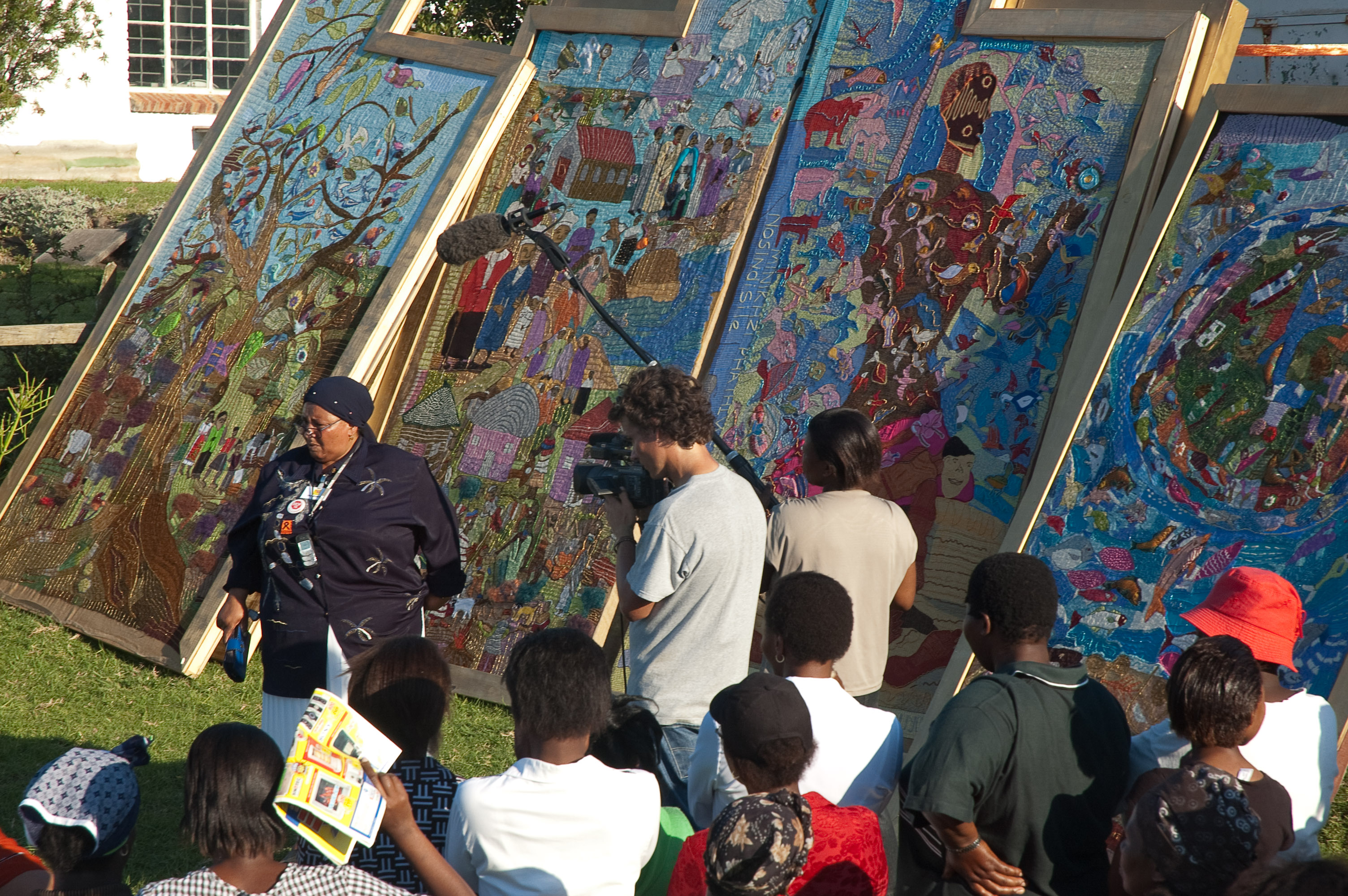
This photograph depicts Eunice Mangwani in her home village of Hamburg, South Africa, surrounded by members of the press and local residents. As the first HIV educator in the village and a central figure in the Keiskamma Art Project, Eunice is seen here occupying a role of advocate for the community, mediating between the lived realities of her community and the external gaze of the media.

Language
Subjects
Extent
Format
Medium
Period
Style
Style/Period
Work Type
Location
Holding Institution
Holding Institution URL
Rights
Repository
Metadata Provided By
Interviewee
Interviewer
Search
Item Title Dr. Carol Hofmeyr: Art as Medical Intervention
General Date 2006-01-01
Precise Date
Resource Type Photographic documentation
Creator
Contributor
Photographer
Description
  • The location of the Cathedral: The Cathedral Church of St. James (Anglican): Located at 106 King St E, this 1853 Gothic Revival cathedral is in the heart of downtown.
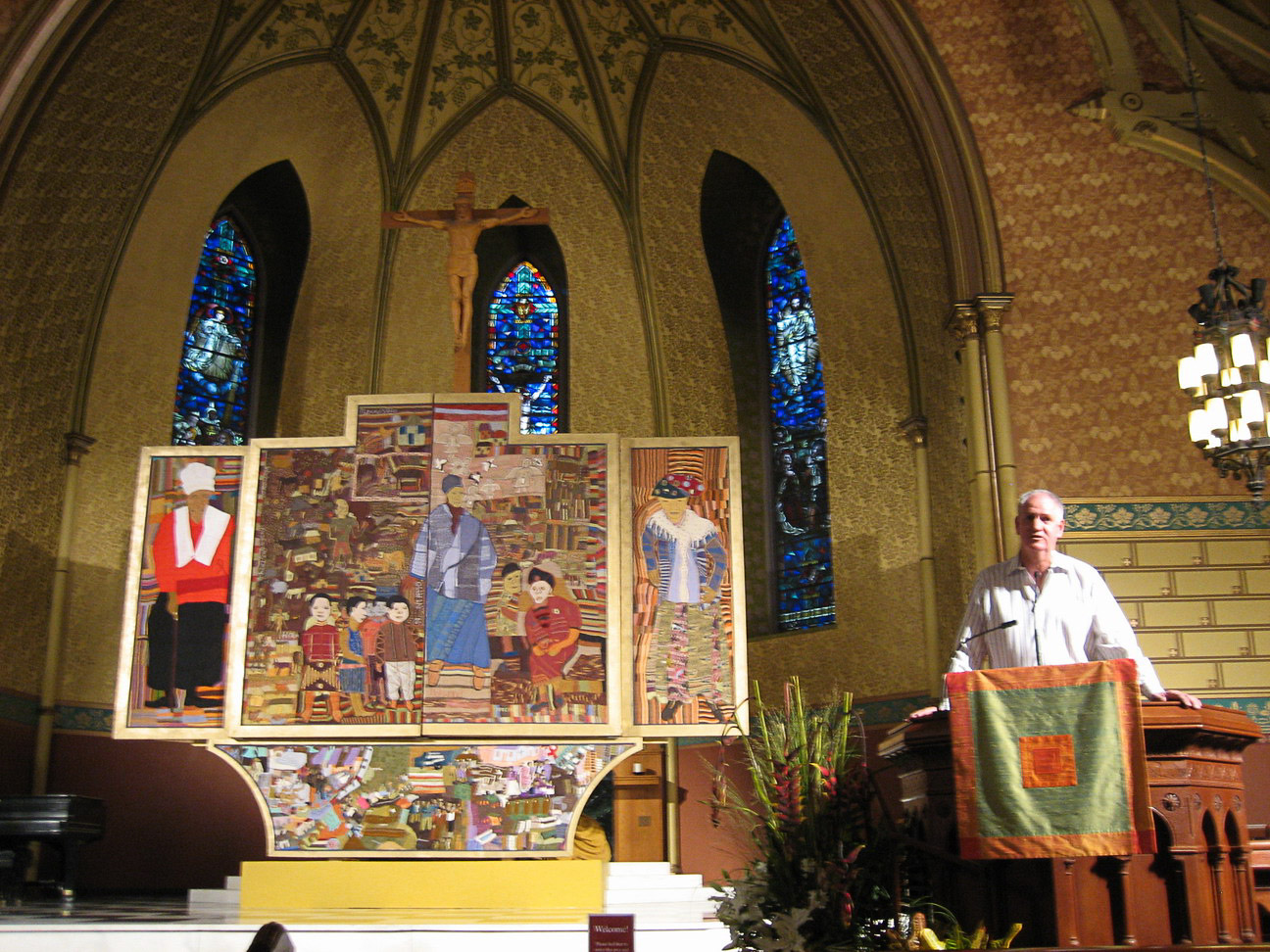
  • The XVI International AIDS Conference (AIDS 2006) was held from August 13–18, 2006, with the main venue being the Metro Toronto Convention Centre (MTCC) on Front Street in downtown Toronto, Canada.

    Medium: Photographic documentation of the XVI International AIDS Conference, Toronto, 2006.

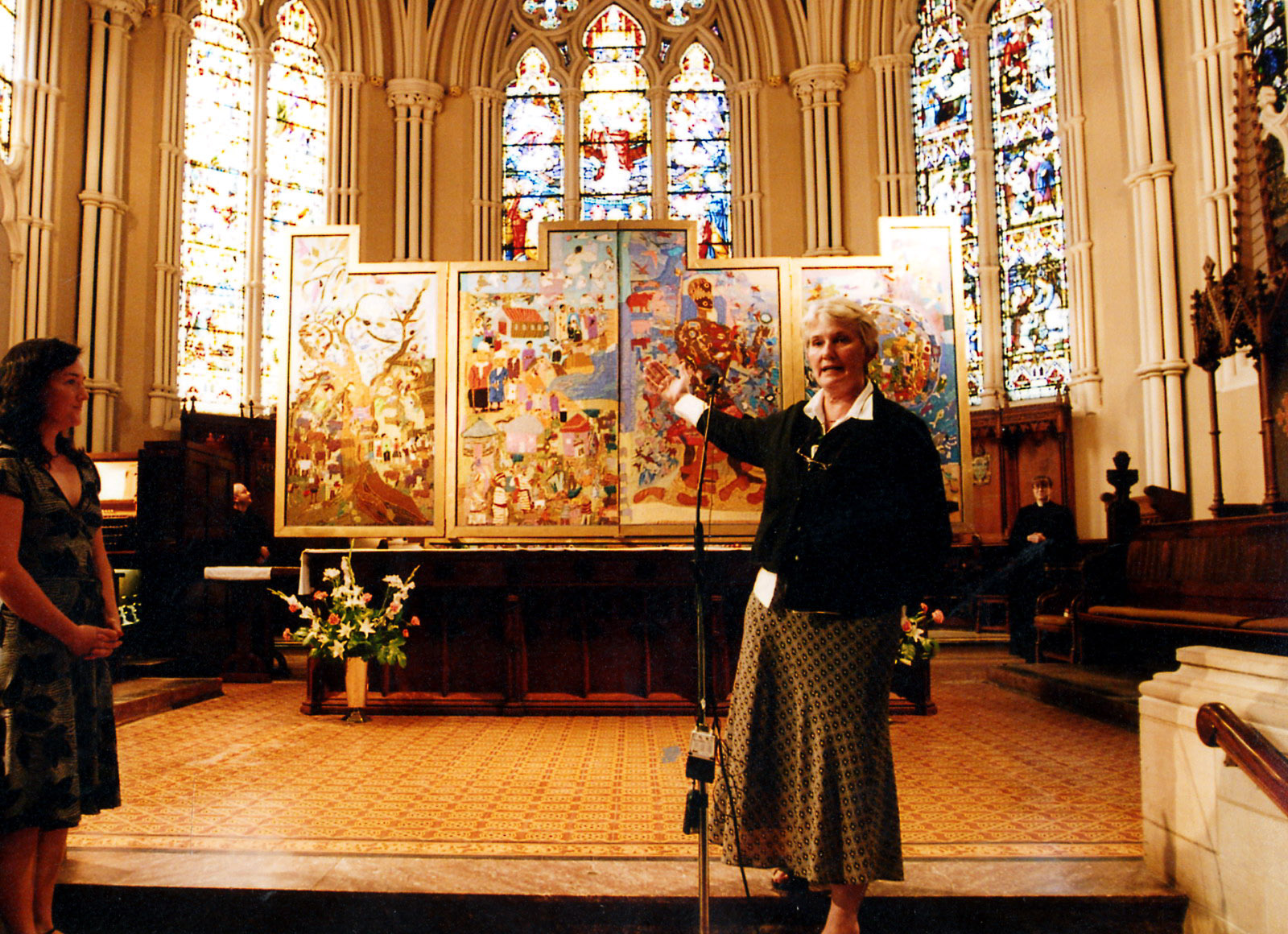
This image records Dr. Carol Hofmeyr, physician and founder of the Keiskamma Art Project, delivering an address within the Cathedral Church of St. James.

[maybe not need it]
Gesturing toward the altarpiece, Hofmeyr occupies a role that bridges clinical medicine and community-led creative practice. Her leadership emerged during a period of profound medical scarcity and political denialism in South Africa, where she posited that art could hold suffering and provide a sense of meaning when pharmaceutical answers were inaccessible.

Under the Gothic Revival arches of the Toronto cathedral, Hofmeyr’s presence serves as a physical articulation of the human connection she considers the project’s central theme. By mobilizing over 130 artists in Hamburg to document their local reality, she facilitated a transition from social silence to international visibility.

This moment at AIDS 2006 marks the realization of her effort to prove that visual storytelling functions as a bridge between the people of Hamburg and the world, anchoring the survival of a community within a global narrative of persistence.

Language
Subjects
Extent
Format
Medium
Period
Style
Style/Period
Work Type
Location
Holding Institution
Holding Institution URL
Rights
Repository
Metadata Provided By
Interviewee
Interviewer
Search
Item Title Eunice Mangwani and the Global Reception
General Date 2006-01-01
Precise Date
Resource Type Photographic documentation
Creator
Contributor
Photographer
Description
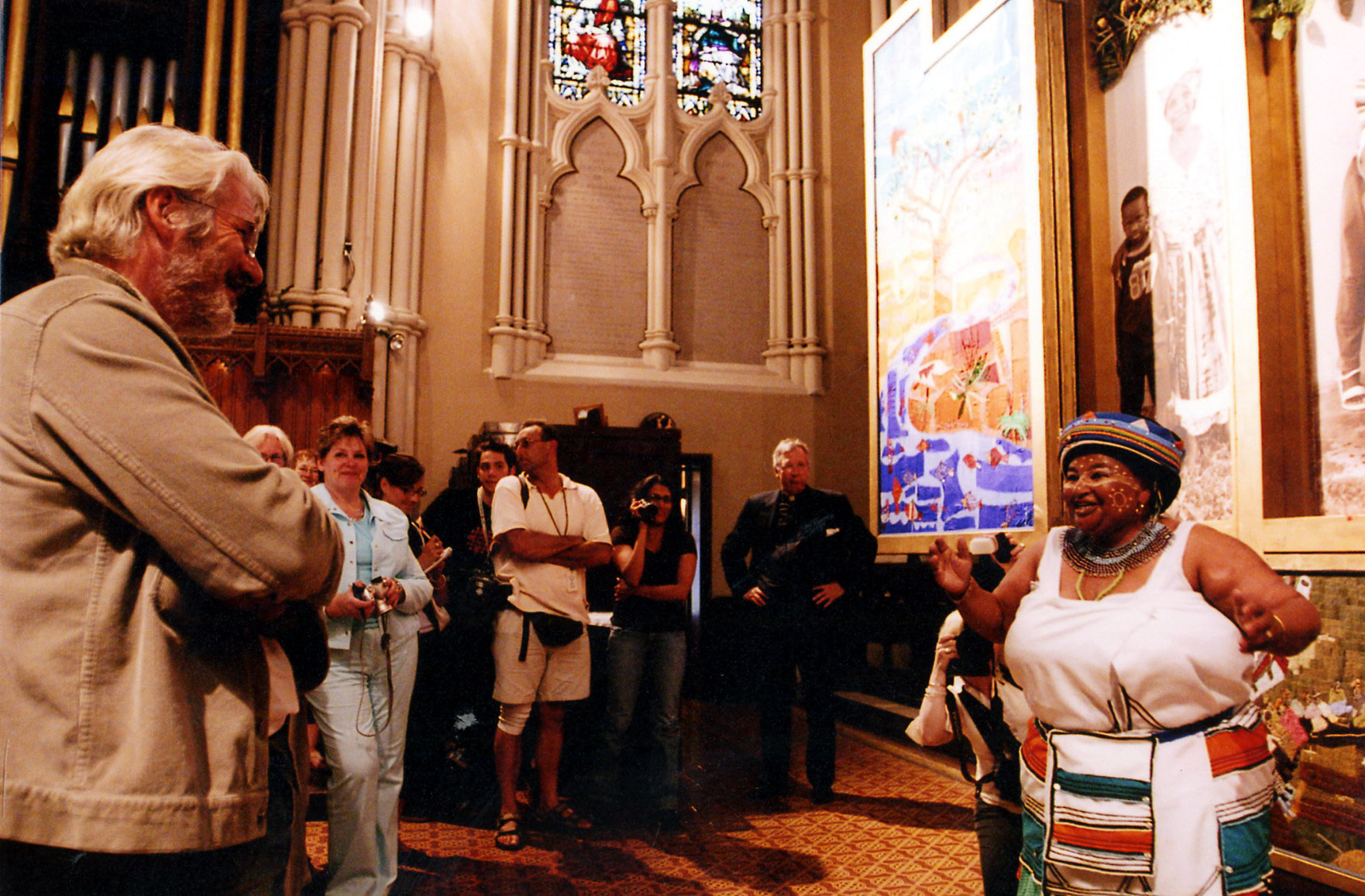
  • The location of the Cathedral: The Cathedral Church of St. James (Anglican): Located at 106 King St E, this 1853 Gothic Revival cathedral is in the heart of downtown.
  • The XVI International AIDS Conference (AIDS 2006) was held from August 13–18, 2006, with the main venue being the Metro Toronto Convention Centre (MTCC) on Front Street in downtown Toronto, Canada.

Medium: Photographic documentation of the XVI International AIDS Conference, Toronto, 2006.

This image records Eunice Mangwani in dialogue with actor and activist Richard Gere at the Cathedral Church of St. James, a significant site for the cultural program of the 2006 International AIDS Conference. Gere played a significant role in publicizing the altarpiece's journey. [end]

[do not need below]
Mangwani, the first HIV educator in Hamburg, South Africa, transitioned from local healthcare responder to a primary spokesperson during the altarpiece's international tour.

Here, she serves as a human bridge, articulating a communal history of loss and recovery to a wider audience. Her presence represents the transition of the Keiskamma artists from a marginalized population to individuals with global agency and voice.

Language
Subjects
Extent
Format
Medium
Period
Style
Style/Period
Work Type
Location
Holding Institution
Holding Institution URL
Rights
Repository
Metadata Provided By
Interviewee
Interviewer
Search
Item Title The Spokesperson and the Sacred Archive
General Date 2006-01-01
Precise Date
Resource Type Photographic documentation
Creator
Contributor
Photographer
Description

Medium: Photographic documentation, Toronto, 2006.

Eunice Mangwani is depicted presenting the work to the public within The Cathedral Church of St. James, positioned directly before her photographic likeness in the third layer of the altarpiece. Visitors to the installation were frequently captivated by her storytelling skills, which provided a personal, human resonance that matched the technical scale of the work. This layer centers on grandmothers and caregivers, whose labor expanded during the South African HIV crisis in the early 2000s. [End]

[do not need it]
The juxtaposition of Mangwani with her portrait—where she appears with her three grandchildren—highlights her identity as both a subject of this history and its most active narrator.

Language
Subjects
Extent
Format
Medium
Period
Style
Style/Period
Work Type
Location
Holding Institution
Holding Institution URL
Rights
Repository
Metadata Provided By
Interviewee
Interviewer
Search
Item Title The Voice of the Altarpiece
General Date 2006-01-01
Precise Date
Resource Type Photographic documentation
Creator
Contributor
Photographer
Description

Medium: Photographic documentation, Toronto, 2006.

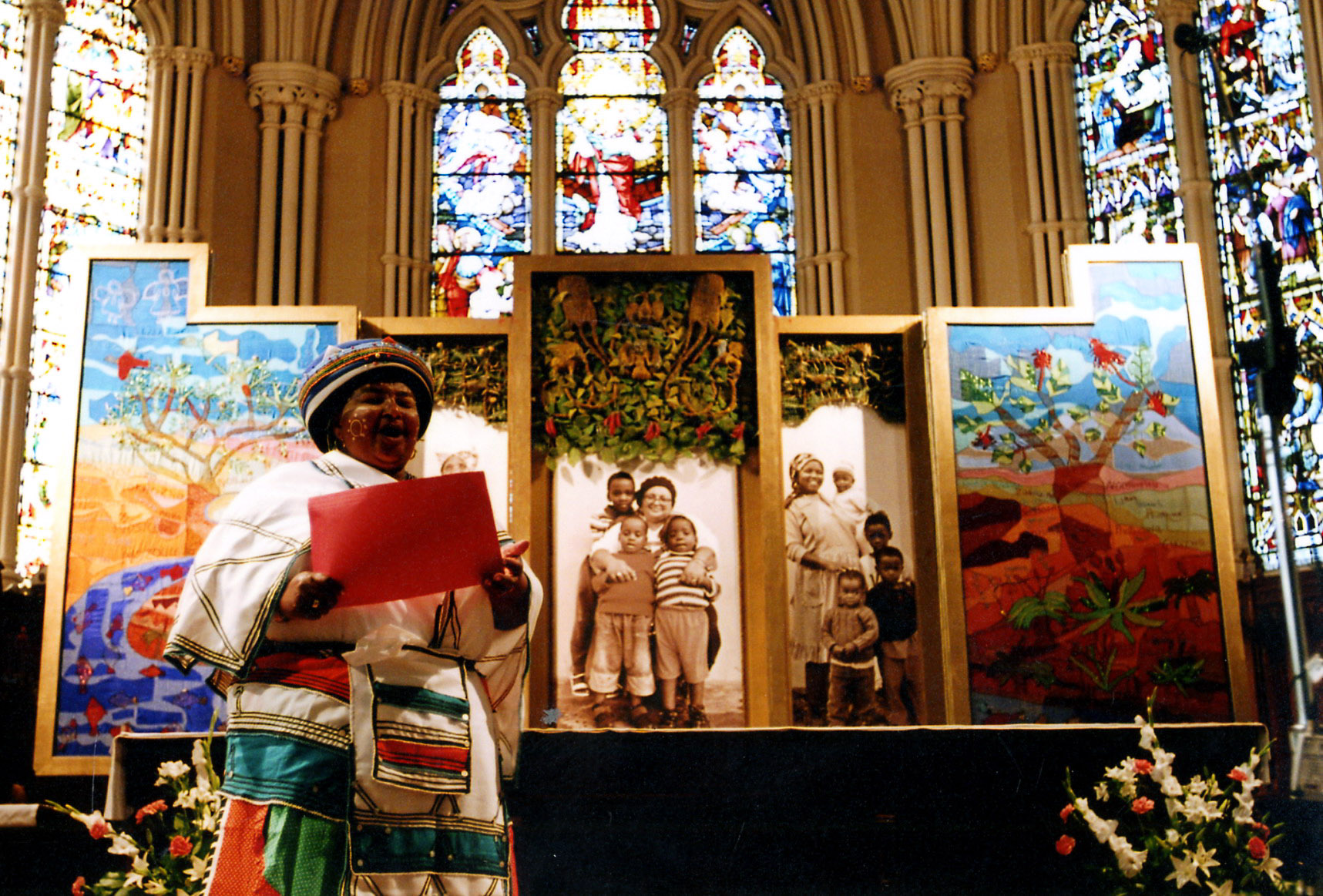
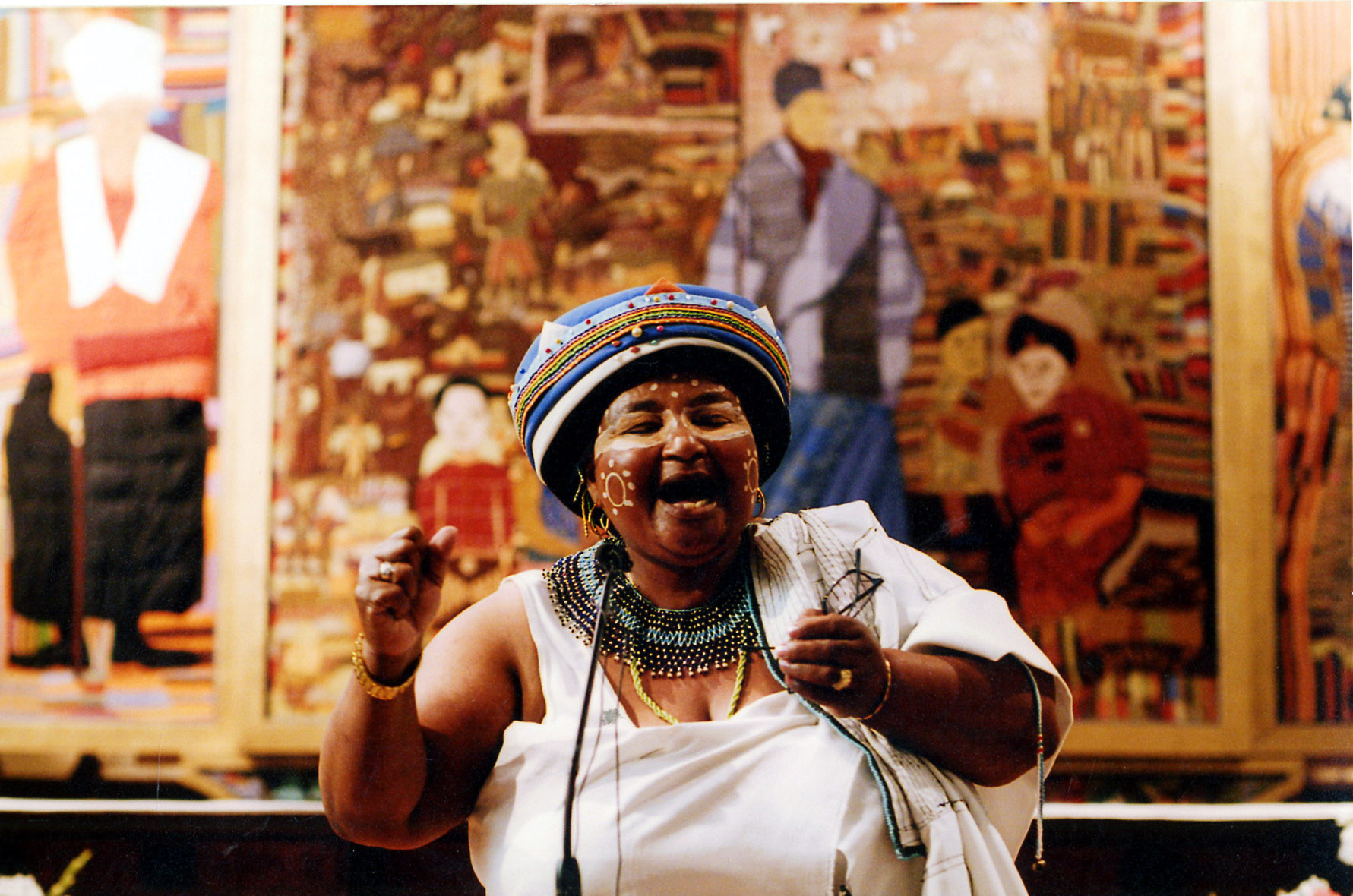
This photograph captures Eunice Mangwani singing within the sanctuary of The Cathedral Church of St. James, an act that provided a sonic dimension to the project’s storytelling. As a healthcare professional and artist, Eunice's vocal contribution functioned as an instrument of advocacy, drawing the public into the shared history of the Hamburg community. ( omit: Her performance emphasized that the altarpiece operates as a living object; the authority of her voice served as a necessary counterpart to the visual power of the embroidery.)

Among the hymns performed by Eunice was “Shine in Your Corner,” a selection remembered by Dr. Carol Hofmeyr as a defining element of the project’s international tour. The presence of Eunice's voice within the cathedral sanctuary established a point of human connection between the people of Hamburg and the global audience, effectively addressing the silence imposed by the political and social denialism of the era.

Language
Subjects
Extent
Format
Medium
Period
Style
Style/Period
Work Type
Location
Holding Institution
Holding Institution URL
Rights
Repository
Metadata Provided By
Interviewee
Interviewer
Search
Item Title
General Date
Precise Date
Resource Type Photographic documentation
Creator
Contributor
Photographer
Description

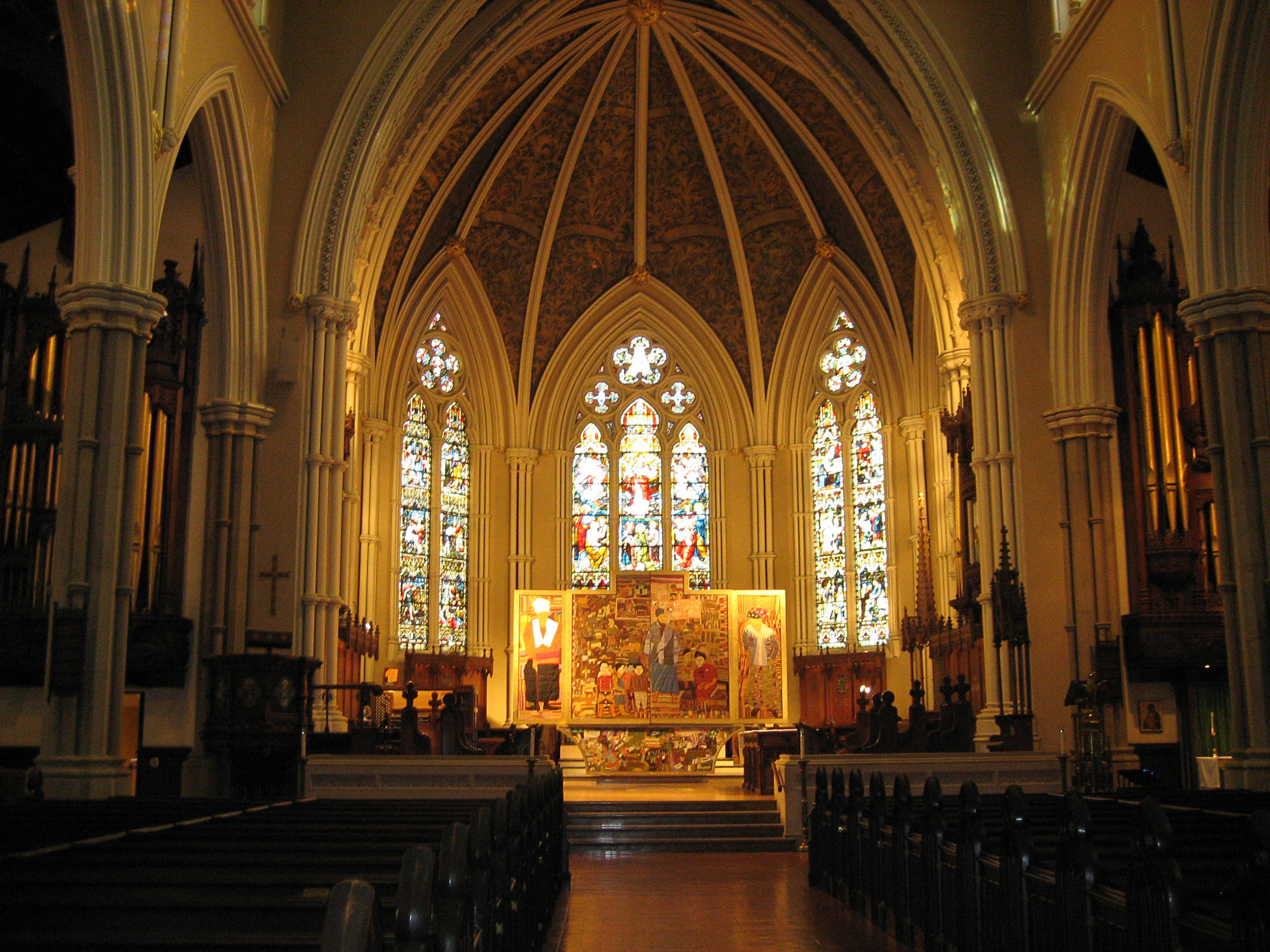
The Keiskamma Altarpiece in The Cathedral Church of St. James in Downtown Chicago.

  • I searched the location of the Cathedral: The Cathedral Church of St. James (Anglican): Located at 106 King St E, this 1853 Gothic Revival cathedral is in the heart of downtown.
Language
Subjects
Extent
Format
Medium
Period
Style
Style/Period
Work Type
Location
Holding Institution
Holding Institution URL
Rights
Repository
Metadata Provided By
Interviewee
Interviewer
Filename Item Title General Date Precise Date Resource Type Creator Contributor Photographer Description Language Subjects Extent Format Medium Period Style Style/Period Work Type Location Holding Institution Holding Institution URL Rights Repository Metadata Provided By Interviewee Interviewer
altarpiece-closed-5000px.jpg The first layer of the Keiskamma Altarpiece 2006-01-01 Exhibitions/Installations Keiskamma Art Collective Medium: Collaborative embroidery and mixed media on masonite. The first layer of the Keiskamma Altarpiece shows the crucifixion reworked through the experience of the Hamburg, South Africa, community. According to Dr. Carol Hofmeyr, this structure was inspired by the Isenheim Altarpiece (Colmar, France), which presents a crucifixion flanked by saints associated with disease. In the Keiskamma Altarpiece, these saints are replaced by women from the community whose lives were shaped by the …
altarpiece-open-1-5000px.jpg The second layer of the Keiskamma Altarpiece 2006-01-01 Exhibitions/Installations Keiskamma Art Collective The second layer of the Keiskamma Altarpiece presents an imagined vision of Hamburg, South Africa, shaped by broad community involvement. This panel was created with a more informal visual style and reflects an effort to imagine the village without disease during the HIV/AIDS crisis. It corresponds to the Annunciation and Nativity panels of the Isenheim Altarpiece, which convey hope through religious narrative. Here, hope is expressed through scenes grounded in local life. On the left stands a …
altarpiece-open-2-5000px.jpg The third layer of the Keiskamma Altarpiece 2006-01-01 Exhibitions/Installations Keiskamma Art Collective Tanya Jordan The third layer of the Keiskamma Altarpiece departs from stitched panels and introduces photographs, marking a deliberate change in technique inspired by the sculptural final stage of the Isenheim Altarpiece. The photographs were taken by Tanya Jordan, a woman living in Hamburg, South Africa, who was involved in the project at the time. This layer centers on grandmothers, whose caregiving roles expanded during the HIV/AIDS crisis. One photograph shows Susan Poliso with her grandson, Lichile, …
dsc1893.jpg The initial stage of The Keiskamma Altarpiece creation 2006-01-01 Exhibitions/Installations Keiskamma Art Collective This monumental work, measuring 13 feet tall and 22 feet wide, was collaboratively created in the village of Hamburg, South Africa, by over 130 community members, mostly women. Due to its massive scale, the artists often had to lay the pieces out on the grass outside the studio and use ladders to view the developing composition.
dsc1894.jpg The initial stage of The Keiskamma Altarpiece creation 2006-01-01 Exhibitions/Installations Keiskamma Art Collective The artists assemble the sections of the altarpiece in the open landscape of Hamburg, framed by the Keiskamma River, a central symbol of the community’s identity and ancestral fishing heritage.
dsc1900.jpg The initial stage of The Keiskamma Altarpiece creation 2006-01-01 Exhibitions/Installations Keiskamma Art Collective This image reveals the initial stage of the intricate structural frame and specialized three-way hinge system designed and built by Dr. Justus Hofmeyr, the husband of project founder Carol Hofmeyr. Beyond his technical role in stretching and securing the panels alongside handyman Jonathan Bertani, Justus served as a prominent medical doctor who actively fought against the South African government’s era of HIV denialism. During a period when the state refused to acknowledge the virus or provide …
dsc1950.jpg The initial stage of The Keiskamma Altarpiece creation with artists 2006-01-01 Exhibitions/Installations Keiskamma Art Collective " By the time we made it, which was very early on in Keiskamma, certain people had emerged as better at drawing. I had never wanted there to be artists and not artists, because I said everyone’s an artist." – Carol Hofmeyr
dsc2008.jpg The Widow (Detail of Layer 1) 2006-01-01 Exhibitions/Installations Keiskamma Art Collective Medium: Collaborative embroidery and mixed media on masonite. This detail portrays a widow, a central figure born from Dr. Carol Hofmeyr’s conceptual reckoning as she sought to translate the traditional crucifixion of the Isenheim Altarpiece (Colmar, France) into a contemporary Hamburg, South Africa context. While Matthias Grünewald’s 16th-century painted original flanked the cross with saints relevant to the plague, Hofmeyr found her inspiration in the everyday sight of mourning clothes on a …
dsc2020.jpg 2006-01-01 Exhibitions/Installations Keiskamma Art Collective layer 2
dsc2022.jpg
dsc2025.jpg
dsc2033.jpg layer 2 the bird on the fig tree
dsc2047.jpg layer 1
dsc2056.jpg Layer 2, Religious Life in Hamburg 2006-01-01 Medium: Collaborative embroidery and mixed media on masonite. This central panel of the second layer documents the various religious groups active within the village of Hamburg, South Africa. The composition, designed by the local women, depicts traditional religion at the base, followed by the specific uniforms of Methodist and Anglican church members, and other non-aligned Christian groups. These scenes serve as a collective reimagining of Hamburg without disease, where the presence of these …
dsc2062.jpg Layer 2, Religious Life in Hamburg 2006-01-01 Medium: Collaborative embroidery and mixed media on masonite. This close-up reveals the intricate embroidery used to depict the church uniforms that signify various religious groups within Hamburg, South Africa. The artists utilized these distinct garments as a visual narrative of the village’s faith structures, which served as central elements in their collective effort to reimagine a community defined by hope rather than disease
dsc2070.jpg layer 2
dsc2107.jpg layer 3
dsc2110.jpg layer 3
dsc2127.jpg layer 3
dsc2133.jpg layer 3
dsc2167.jpg bottom part
dsc2169.jpg bottom part
dsc2175.jpg bottom part
dsc_0295.jpg layer 3
dsc_0296.jpg layer 3
dsc_0300.jpg layer 3 the Keiskamma liver
dsc_0301.jpg layer 3 the Keiskamma liver
dsc_0302.jpg Leyer 3 the Keiskamma liver
dsc_0303.jpg layer 3 the Keiskamma liver
dsc_0306.jpg layer 2
dsc_0307.jpg layer 2
dsc_0308.jpg layer 2
dsc_0310.jpg layer 2
dsc_0311.jpg layer 2
dsc_0313.jpg layer 2
dsc_0315.jpg layer 2
dsc_0316.jpg layer 2
dsc_0317.jpg layer 2 left
dsc_0318.jpg layer 2 left
chicago.jpg The Keiskamma Altarpiece in St. James Cathedral in Chicago 2006-01-01 Exhibitions/Installations Keiskamma Art Collective MAKE ART/STOP AIDS brought The Keiskamma Altarpiece to the International AIDS Conference. In 2006, it was exhibited at St. James Episcopal Cathedral in Chicago as the first stop on its U.S. tour, showcasing stories of loss and resilience from the village of Hamburg.
dsc1954.jpg Eunice Mangwani Community Agency 2006-01-01 Photographic documentation Medium: Photographic documentation, Hamburg, South Africa. This photograph depicts Eunice Mangwani in her home village of Hamburg, South Africa, surrounded by members of the press and local residents. As the first HIV educator in the village and a central figure in the Keiskamma Art Project, Eunice is seen here occupying a role of advocate for the community, mediating between the lived realities of her community and the external gaze of the media.
toronto-carol-altarpiece.jpg Dr. Carol Hofmeyr: Art as Medical Intervention 2006-01-01 Photographic documentation The location of the Cathedral: The Cathedral Church of St. James (Anglican): Located at 106 King St E, this 1853 Gothic Revival cathedral is in the heart of downtown. The XVI International AIDS Conference (AIDS 2006) was held from August 13–18, 2006, with the main venue being the Metro Toronto Convention Centre (MTCC) on Front Street in downtown Toronto, Canada. Medium: Photographic documentation of the XVI International AIDS Conference, Toronto, 2006. This image records Dr. Carol Hofmeyr, …
toronto-eun-richard.jpg Eunice Mangwani and the Global Reception 2006-01-01 Photographic documentation The location of the Cathedral: The Cathedral Church of St. James (Anglican): Located at 106 King St E, this 1853 Gothic Revival cathedral is in the heart of downtown. The XVI International AIDS Conference (AIDS 2006) was held from August 13–18, 2006, with the main venue being the Metro Toronto Convention Centre (MTCC) on Front Street in downtown Toronto, Canada. Medium: Photographic documentation of the XVI International AIDS Conference, Toronto, 2006. This image records Eunice Mangwani in …
toronto-eun-toronto.jpg The Spokesperson and the Sacred Archive 2006-01-01 Photographic documentation Medium: Photographic documentation, Toronto, 2006. Eunice Mangwani is depicted presenting the work to the public within The Cathedral Church of St. James, positioned directly before her photographic likeness in the third layer of the altarpiece. Visitors to the installation were frequently captivated by her storytelling skills, which provided a personal, human resonance that matched the technical scale of the work. This layer centers on grandmothers and caregivers, whose labor expanded during …
toronto-eunice-sing.jpg The Voice of the Altarpiece 2006-01-01 Photographic documentation Medium: Photographic documentation, Toronto, 2006. This photograph captures Eunice Mangwani singing within the sanctuary of The Cathedral Church of St. James, an act that provided a sonic dimension to the project’s storytelling. As a healthcare professional and artist, Eunice's vocal contribution functioned as an instrument of advocacy, drawing the public into the shared history of the Hamburg community. ( omit: Her performance emphasized that the altarpiece operates as a living object; the …
toronto-img_2285.jpg Photographic documentation The Keiskamma Altarpiece in The Cathedral Church of St. James in Downtown Chicago. I searched the location of the Cathedral: The Cathedral Church of St. James (Anglican): Located at 106 King St E, this 1853 Gothic Revival cathedral is in the heart of downtown.